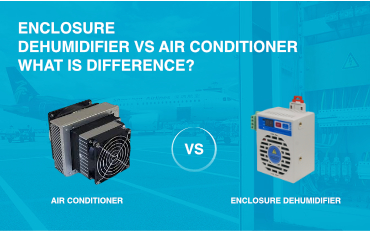
Electrical Enclosure Dehumidifier vs Air conditioner – What Is Difference?
Enclosure dehumidifier vs air conditioner – is a dehumidifier

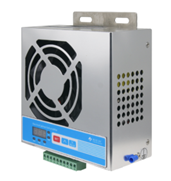
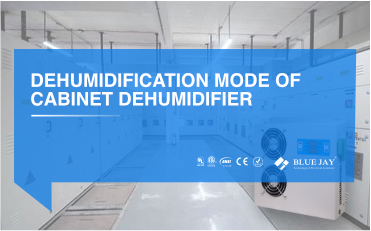
The dehumidification mode of cabinet dehumidifiers defines the fundamental operating logic and control strategies of the equipment. In industrial power distribution environments, cabinet dehumidifiers are specialized devices designed to maintain insulation integrity and minimize corrosion of metallic components.
Modern industrial cabinet dehumidifiers typically support three primary modes: Automatic Dehumidification Mode, Manual Dehumidification Mode, and Anti-Condensation Dehumidification Mode.
Many electrical control cabinets operate in unattended environments; thus, long-term humidity stability is essential to prevent insulation degradation and condensation.
In automatic dehumidify mode, the user sets a maximum allowable relative humidity value while ensuring that the cabinet temperature remains within the operating range of the dehumidifier. When the measured humidity exceeds this threshold, the dehumidifier automatically activates and removes moisture through condensation. Once the humidity falls below the setpoint, the system shuts down automatically. This establishes a closed-loop humidity control mechanism requiring no manual intervention.
Manual dehumidification mode refers to direct user control of the start/stop operation of the dehumidifier. Once activated, the device runs continuously regardless of the ambient humidity and only stops when manually turned off.
However, when a dehumidifier operating in manual mode receives power through an external enclosure hygrostat, its operational behavior becomes governed by the hygrostat. The enclosure hygrostat monitors the cabinet humidity and interrupts the power supply once the humidity falls below the threshold, causing the dehumidifier to stop.
Thus, although the enclosure dehumidifier is set to manual mode, its actual run–stop behavior becomes equivalent to automatic humidity-based control.
Anti-condensation dehumidify mode is a coordinated temperature–humidity control strategy designed to prevent condensation inside the cabinet. Under low-temperature, high-humidity conditions, the controller may prioritize activating a heater to raise the temperature above the dew point; under high-temperature, high-humidity conditions, the controller enables the dehumidifier to reduce the moisture content of the air.
This mode is typically achieved through coordinated operation between the dehumidifier and a temperature–humidity controller. The controller continuously monitors environmental parameters and alternates between heating and dehumidification according to preset dew-point thresholds, providing a comprehensive solution for condensation prevention.
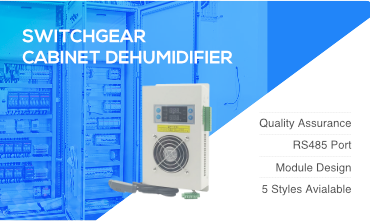
Blue Jay cabinet dehumidifiers support Automatic and Manual operating modes, allowing users to select the most suitable mode according to project requirements.
When integrated with Blue Jay temperature–humidity controllers, the system can also implement a full Anti-Condensation Dehumidification Mode, providing enhanced environmental control and improving the operational reliability of electrical cabinets.
Conclusion
These automatic, manual, and anti-condensation modes establish the essential control framework for cabinet dehumidification. Through humidity or temperature–humidity coordination, they provide effective insulation protection and condensation prevention. Users can select the appropriate mode and integrate controllers as needed to enhance system reliability and environmental stability.

Enclosure dehumidifier vs air conditioner – is a dehumidifier
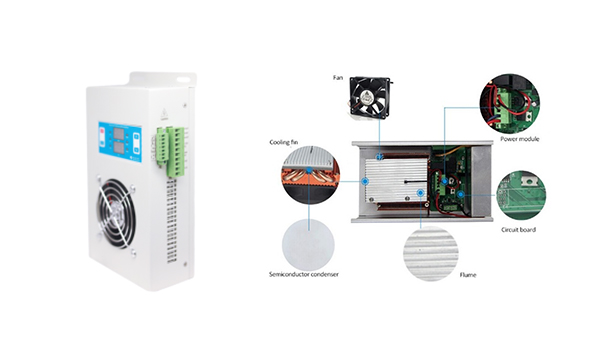
Do you know the electric cabinet dehumidifier construction? This
Due to the lack of understanding of a switchgear