Leakage Current Protection for Subway Station Power Distribution System
Leakage current in a subway station’s power distribution system

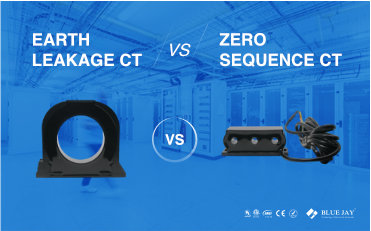
While both leakage current transformers (CTs) and zero-sequence current transformers (ZSTs) are used to monitor fault currents, there are some differences between them in certain applications.
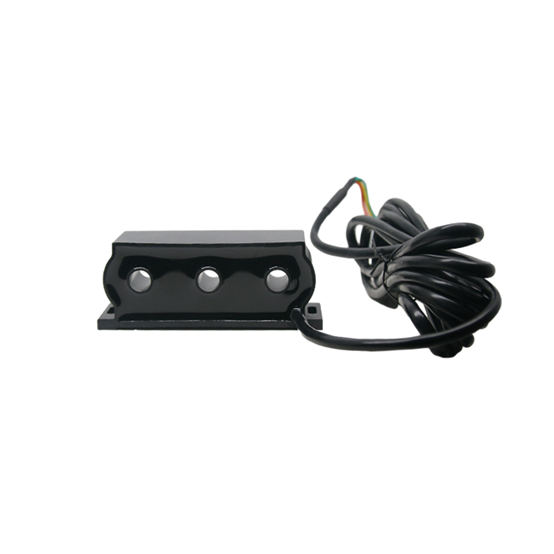
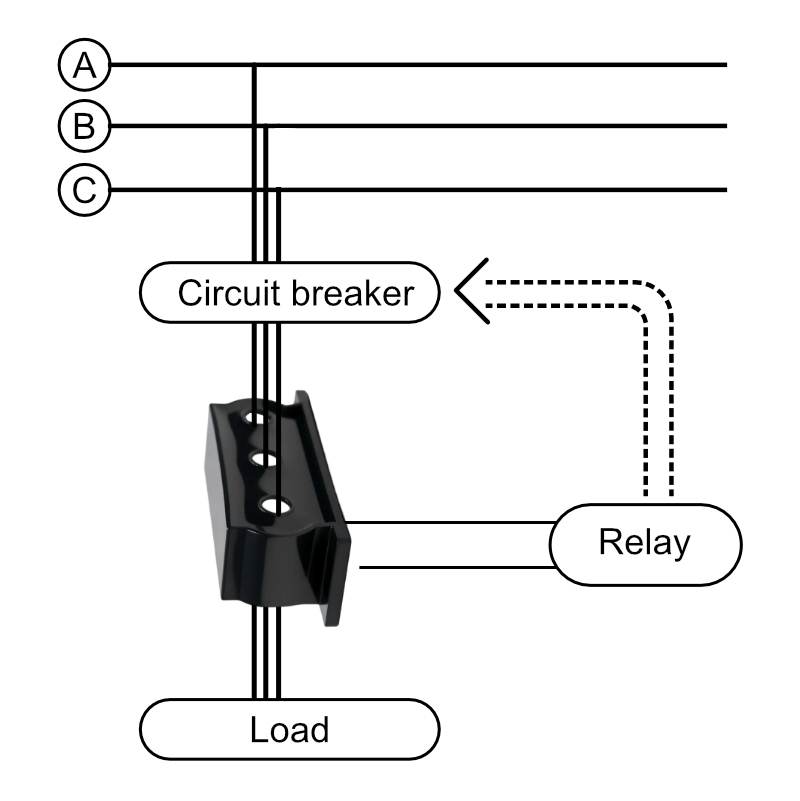
The main function of a ZCT is to detect the zero-sequence current in the power grid and convert it into a low-level electrical signal for other devices to process and protect. In the power grid, ZCT are typically used in conjunction with protective relays to implement zero-sequence overcurrent protection, zero-sequence grounding protection, etc. The most typical ZCT has three terminals; they are only called ZCTs when used in three-phase systems.
Zero-sequence current is mainly generated by asymmetric faults in three-phase systems (such as single-phase grounding, two-phase short-circuit grounding, etc.). Its vector direction is different from positive-sequence and negative-sequence currents. ZCT accurately captures this special current component to provide fault location and action basis for protective relay devices. In addition, the turns ratio accuracy of ZCT must match the zero-sequence current range of the system, and it is usually used for ground fault monitoring in medium and high-voltage power grids.
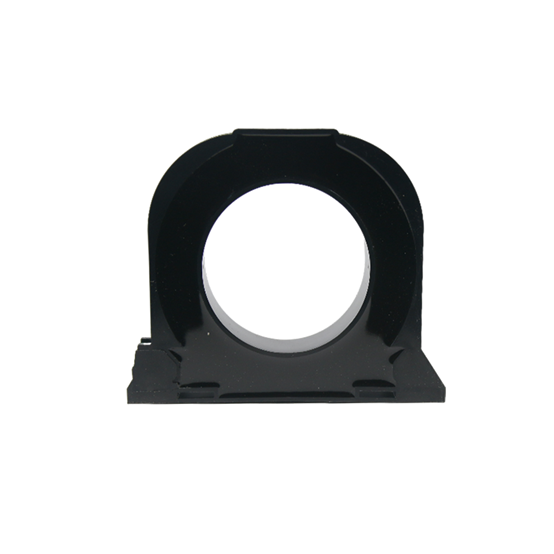
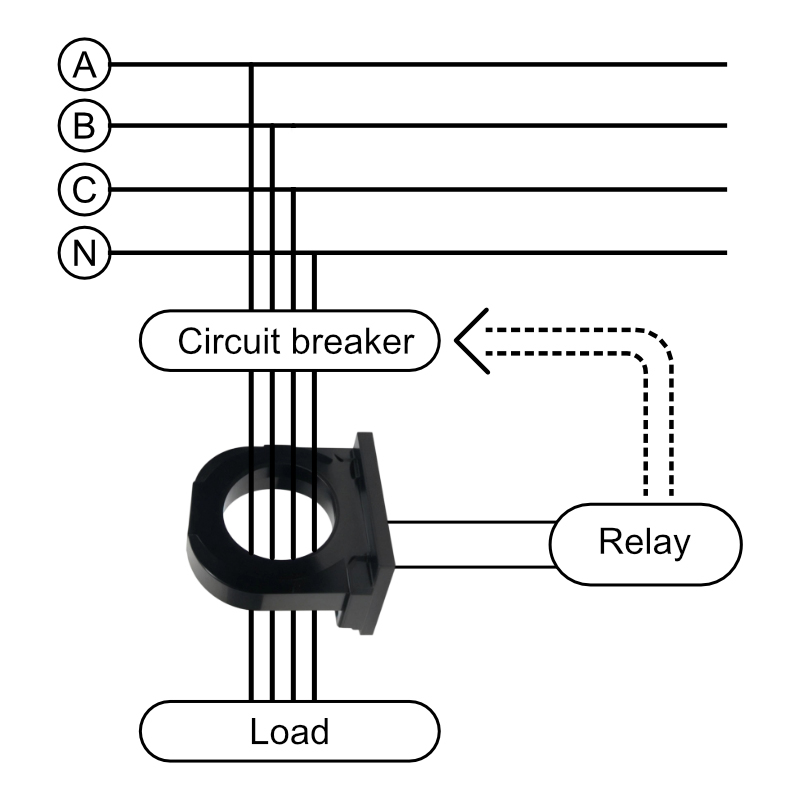
The main function of an earth leakage current transformer is to detect leakage current in electrical equipment and convert it into a low-level electrical signal output to a leakage current relay for processing and protection. The earth leakage relay determines whether a leakage fault exists by comparing the leakage current with the rated leakage operating current. Once a leakage fault is detected, the earth leakage current relay quickly cuts off the circuit to protect electrical equipment and personal safety. Earth leakage current transformers can be used in single-phase and three-phase systems.
Leakage current is essentially the “loss” of current in the circuit (such as leakage to the ground through the equipment case or insulation layer). It has higher detection accuracy (usually up to milliampere level), and some high-precision LCTs can also distinguish between instantaneous leakage and continuous leakage to avoid false triggering of protection actions.
Zero-sequence current transformers primarily use the principle of current imbalance, separately collecting the current of each of the three phases (A, B, C). The presence of a current fault is determined by whether the vector sum of the three-phase currents equals zero. During installation, the A, B, and C phase lines pass through their respective windows.
Earth leakage current transformers primarily determine the presence of a leakage current fault by measuring the current difference between the incoming and outgoing lines. During installation, all phase lines (A, B, C, N) must pass through the leakage current transformer; this ensures that the signal received by the leakage current relay is proportional to the vector sum of the line current and the neutral current.

Leakage current in a subway station’s power distribution system
Earth leakage protection is a highly sensitive protection measure

Although earth leakage, residual current, and zero-sequence current are