Basic Knowledge for Electric Vehicle Insulation
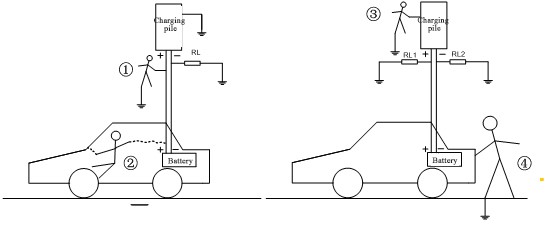
Since the electric vehicle insulation failure will cause the

Insulation Monitoring Device (IMD) is the key technical core for high-voltage safety and operational continuity in electric vehicle (EV) charging systems. Deeply integrated with the charging system, it jointly builds an indispensable safety protection system in the E-Mobility field, providing underlying support for the reliability and safety of the entire power transmission process.
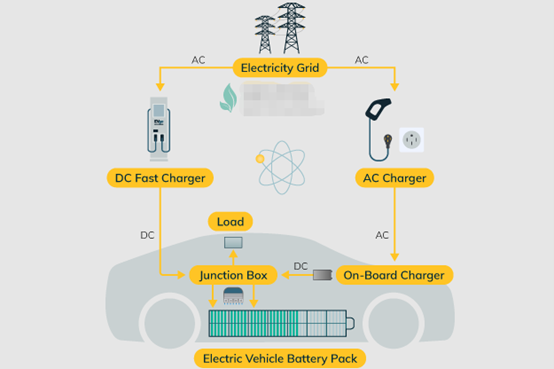
An electric vehicle charging system is a complete technical and infrastructure system that safely and efficiently transmits electrical energy from the power grid or other power sources to the high-voltage battery of an electric vehicle. The system mainly consists of four core components: power grid power supply, charging pile, on-board charger (OBC), and vehicle high-voltage battery pack, with its core function being the stable conversion and safe transmission of electrical energy.
According to the differences in current type and energy conversion location, EV charging systems can be divided into two main types: AC charging and DC charging. The core difference between the two lies in the main body responsible for power conversion:
AC Charging System: The alternating current output by the AC charging pile needs to be converted into direct current through the vehicle’s built-in on-board charger (OBC) before being input into the vehicle’s high-voltage battery system, which is suitable for slow charging scenarios;
DC Charging System: The DC charging pile directly converts alternating current into direct current through the internally integrated power module, without the need for secondary conversion by the on-board charger, and can directly charge the vehicle’s high-voltage battery, which is suitable for fast charging scenarios.
The operating voltage of the high-voltage battery system of electric vehicles usually ranges from 400V to 1000V. To ensure personal safety and the continuous operation of the high-voltage DC system in the event of the first fault, the system is generally designed as an ungrounded system (IT system). However, traditional Residual Current Detection (RCD) devices have technical limitations and cannot effectively monitor insulation faults in IT systems and pure DC systems—RCD can only judge ground faults by detecting current imbalance, making it difficult to capture early hidden dangers such as gradual degradation of insulation resistance.
Therefore, the Insulation Monitoring Device (IMD) has become the only mandatory safety device that can meet the following core needs:
The application logic and installation layout of IMD in AC and DC charging systems are significantly different, and full-scenario coverage needs to be achieved in combination with the characteristics of the system architecture:
Insulation monitoring device in DC Charging Systems
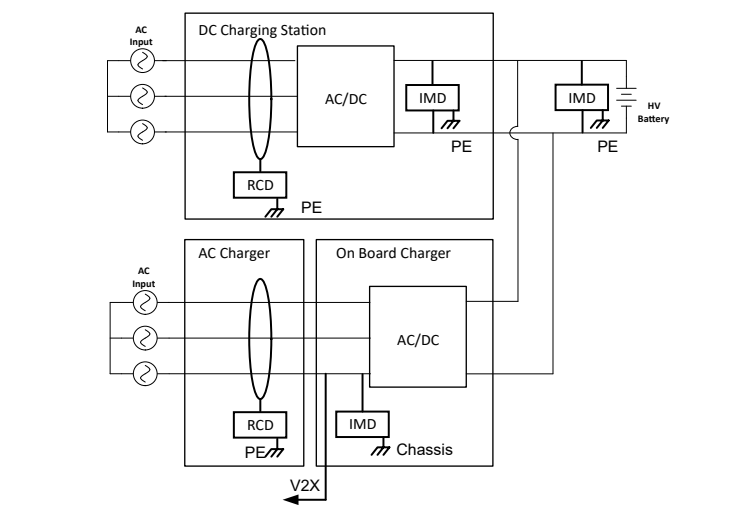
The high-voltage power transmission path of the DC charging system involves two independent devices: the charging pile and the vehicle. Therefore, a “dual-side collaborative monitoring” mode is adopted, with DC insulation monitoring device installed on both the charging pile side and the vehicle side to form a full-link insulation protection:
Charging Pile-side IMD: Installed inside the DC charging pile, the core monitoring object is the DC output circuit of the charging station’s AC/DC power conversion module, that is, the insulation state between the ungrounded system (IT system) and protective earth (PE). Its function is to ensure that the insulation performance of the DC side of the charging pile itself meets the standards before power is transmitted to the vehicle connector, avoiding safety risks caused by insulation faults on the equipment side from the source;
Vehicle-side IMD: Integrated inside the vehicle and directly connected to the high-voltage battery pack (ungrounded DC system), its main function is to real-time monitor the insulation resistance between the high-voltage battery system and the vehicle chassis (PE). Whether the vehicle is driving or charging, the device can continuously ensure the personal safety of passengers and external operators, avoiding electric shock risks caused by insulation failure.
Application in AC Charging Systems
No separate insulation monitoring device is required inside the AC charging pile, but the vehicle side needs to achieve full-scenario coverage through a “dual-IMD division of labor monitoring” mode: two IMDs need to be installed inside the vehicle, corresponding to the high-voltage battery system and the DC side (or IT monitoring point) of the internal conversion module of the on-board charger (OBC) respectively:
High-voltage Battery System IMD: Focuses on monitoring the insulation state between the battery pack and the vehicle chassis, ensuring the safety of passengers during vehicle driving and charging.
OBC-specific IMD: The core is to monitor the insulation state of the DC side circuit inside the OBC, ensuring safe isolation between the external power grid and the on-board high-voltage battery system, avoiding mutual conduction of insulation faults between the grid side and the battery side, and ensuring the safety of the power conversion process.
In response to the different application scenarios and monitoring needs of AC and DC EV charging systems, BlueJay provides precisely matched insulation monitoring product solutions, achieving full-link coverage from charging piles to vehicle terminals:
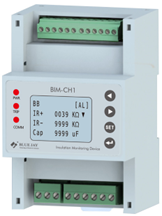
To meet the insulation fault monitoring needs of DC charging pile equipment, Blue Jay recommends the BIM-CH1 insulation monitoring device. Specifically designed for DC systems (IT systems), this product supports a wide voltage range monitoring of 0-1000VDC, with an insulation resistance measurement range of 1KΩ-10MΩ, which can accurately capture changes in the insulation state of the DC output circuit of the charging pile’s power conversion module.
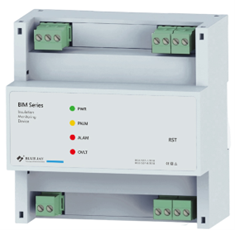
To meet the insulation fault monitoring needs of the on-board charger (OBC) and high-voltage battery system inside the vehicle, Blue Jay recommends the BIM-M1000 insulation monitoring device. This product supports wide voltage monitoring of 0-1000VAC/DC, is compatible with both AC and DC scenarios, and has an insulation resistance measurement range of 0-50MΩ, which can fully cover the insulation monitoring needs of the vehicle’s high-voltage system.
The Insulation Monitoring Device (IMD) is not only a core safety component of DC charging piles but also an essential safety guarantee for the high-voltage electrical systems and on-board chargers (OBC) of modern Battery Electric Vehicles (BEV) and Plug-in Hybrid Electric Vehicles (PHEV). From the source monitoring of DC charging piles to the full-scenario coverage of vehicle terminals, IMD assumes the continuous and indispensable responsibility of insulation fault monitoring in the entire EV charging system, building a solid safety barrier for every link of power transmission and promoting the development of the electric vehicle industry towards a safer and more reliable direction.

Since the electric vehicle insulation failure will cause the
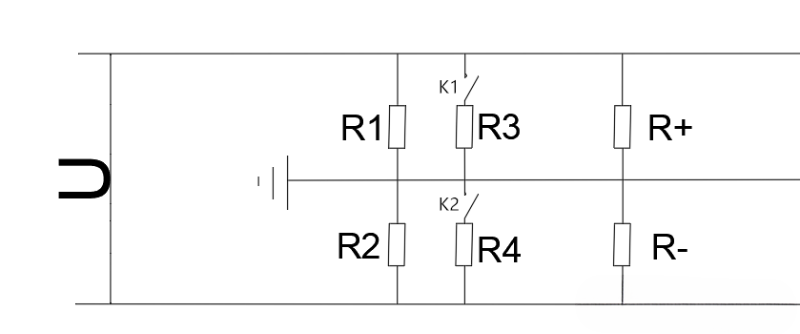
When it comes to the insulation monitoring device working
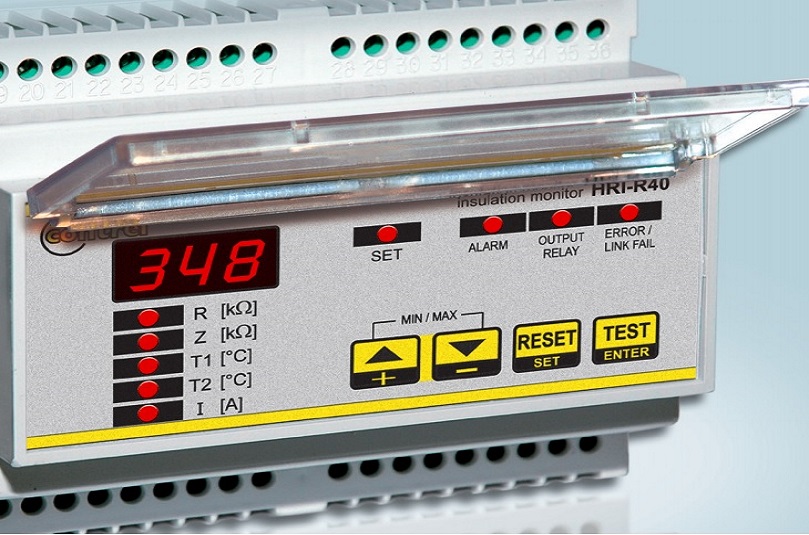
According to the standards, the monitoring of ungrounded networks