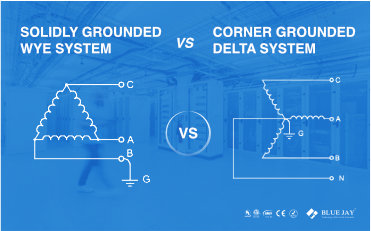
Low Voltage Solidly Grounded Wye & corner grounded Delta system In US
Low-voltage electrical systems in the United States are primarily governed by the National Electrical Code (NEC, NFPA 70). Based on application requirements across residential, commercial, and industrial sectors, two fundamental winding configurations are used: Wye (star) and Delta. It is important to note that winding configuration and grounding method are independent—a Wye system is not necessarily grounded, and a Delta system is not necessarily ungrounded. By combining these configurations with different grounding methods, four typical low-voltage system types are formed in the U.S.:
-. Solidly grounded Wye system
-. Corner-grounded Delta system
-. Center-tapped grounded Delta system
-. Split-phase system
These LV systems cover a wide range of applications, with the solidly grounded Wye system being the most widely used today. This article focuses on the solidly grounded Wye system and the corner-grounded Delta system.
What is a Solidly Grounded Wye System?
The solidly grounded Wye system is the most widely adopted and versatile wiring configuration in low-voltage electrical systems within the United States. Its core configuration consists of Wye-connected windings with the neutral point directly connected to ground. Classified as a standard three-phase, four-wire system, it comprises three phase conductors (L1, L2, L3), one neutral conductor (N), and one protective earth conductor (PE), thereby perfectly accommodating the power supply requirements for both three-phase and single-phase loads.
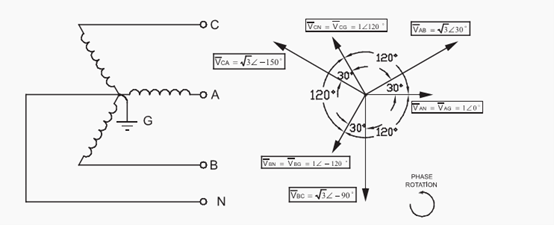
The fundamental characteristics of a solidly grounded Wye system are as follows:
-. The system utilizes a Wye connection.
-. The neutral point is directly connected to ground.
-. The system provides both phase-to-phase voltage and phase-to-ground voltage.
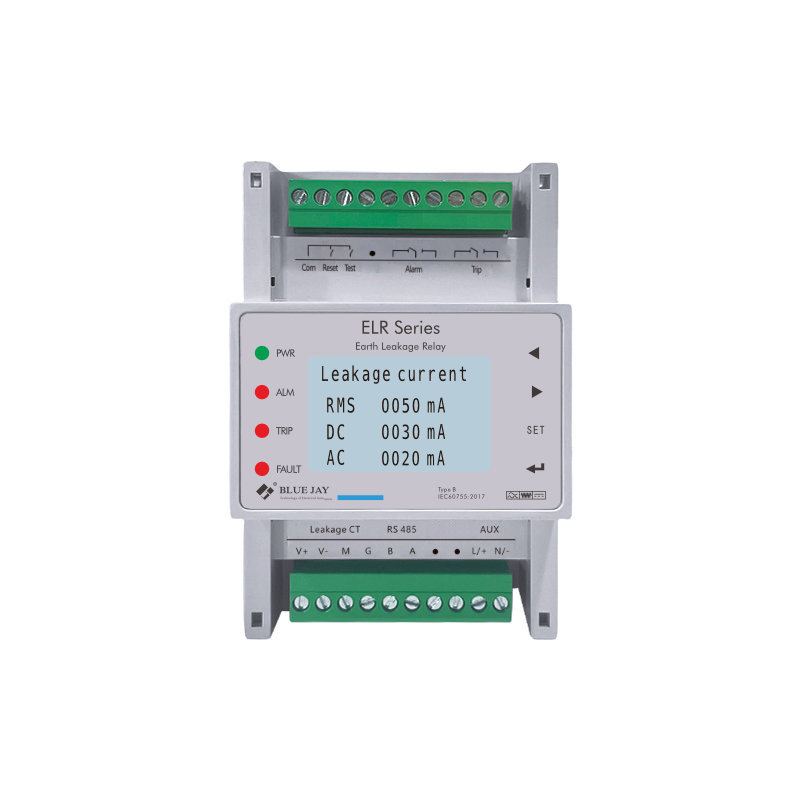
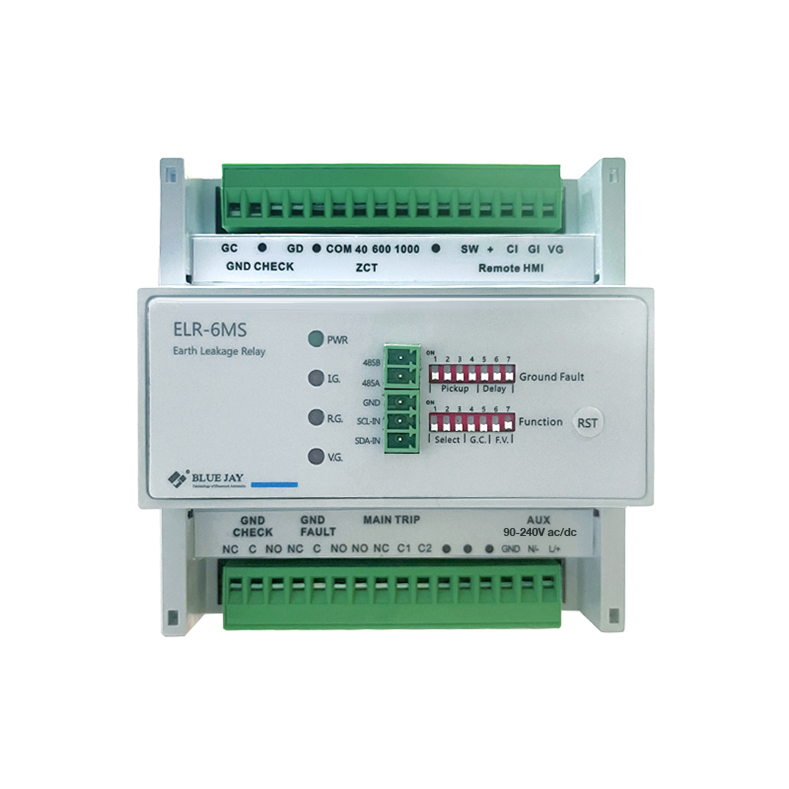
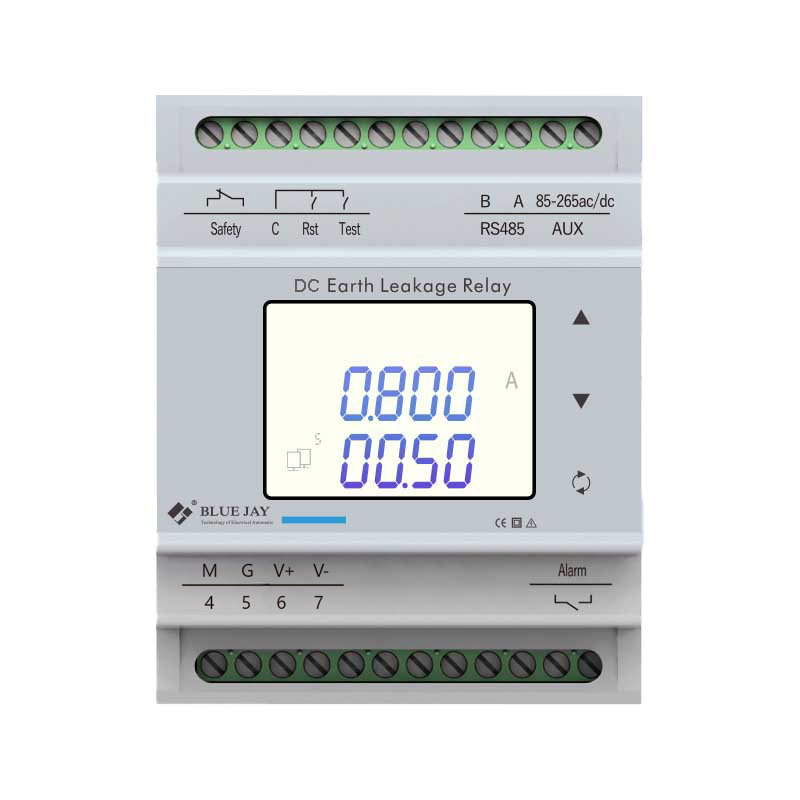
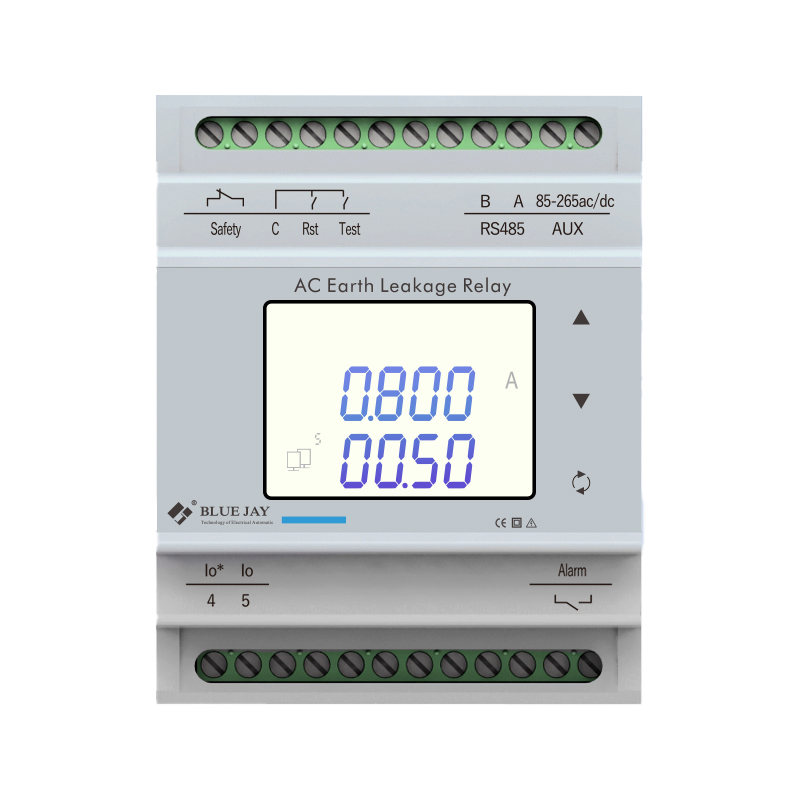
Typical voltage ratings for this system include 120/208V (208V phase-to-phase; 120V phase-to-neutral for single-phase loads) and 277/480V (480V phase-to-phase; 277V phase-to-neutral for single-phase loads). Of these, the 120/208V configuration is widely utilized in residential and small-scale commercial settings, while the 277/480V configuration is predominantly employed in large commercial and industrial facilities. A drawback of this configuration is that fault currents can be substantial, potentially triggering arc flash incidents; consequently, faults must be cleared rapidly to prevent equipment damage and mitigate fire hazards. To address this limitation, Earth leakage protection relays—also known as residual current devices (RCDs)—can be utilized within a solidly grounded Wye system to supplement or serve as an alternative to traditional overcurrent protection devices. This approach is particularly well-suited for applications where stringent requirements exist regarding personnel safety and equipment protection.
The underlying protection logic involves monitoring the vector sum of the currents flowing through the three phase conductors and the neutral conductor. In the event of a ground fault, a portion of the fault current is diverted through the grounding electrode, causing the current vector sum to deviate from zero. Upon detecting this leakage current, the relay rapidly issues a signal to trip the circuit breaker, thereby isolating the faulted circuit.
What is a Corner-Grounded Delta System?
A corner-grounded delta system involves directly grounding one of the corners (vertices) of the delta configuration. It falls under the “Delta winding + direct single-corner grounding” wiring scheme; it lacks a neutral conductor and consists solely of three phase conductors, thereby constituting a three-phase, three-wire system. Consequently, it is compatible only with balanced three-phase loads and cannot directly supply power to single-phase loads.
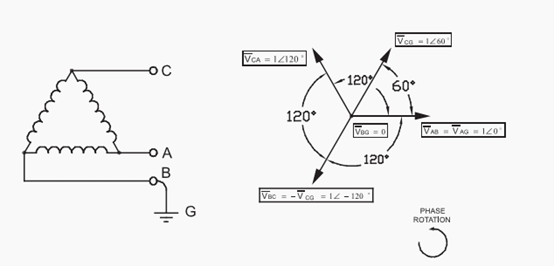
Its core characteristic is that ground fault currents are relatively low, allowing the system to continue operating—albeit for a limited duration—even in the presence of a fault. However, the phase-to-ground voltages within the system are asymmetrical; specifically, the grounded phase is prone to being misidentified as a neutral conductor, and the system carries a heightened risk of overvoltage during arcing ground faults. Currently, this configuration is no longer considered a mainstream practice and is encountered only in a small number of legacy industrial systems or in specific scenarios requiring continuous power supply (such as certain older production lines).
The primary voltage level associated with this system is 240V (three-phase). It does not provide a phase-to-ground voltage output and is suitable exclusively for balanced three-phase loads—such as those found in older industrial production lines or specific industrial equipment power supply systems.
To address the inherent challenges of this system—namely, its low ground fault currents and the insufficient sensitivity of traditional overcurrent protection devices—we recommend the use of high-sensitivity residual current protection relays, with an adjustable trip current range typically set between 30 mA and 100 mA.
What is the difference between grounded Wye and Delta grounded system?
| Comparison | Solidly Grounded Wye System | Corner-Grounded Delta |
| Winding and Grounding Configuration | Wye winding with neutral point solidly grounded; three-phase, four-wire system (L1, L2, L3, N, PE) | Delta winding with one corner directly grounded; three-phase, three-wire system (L1, L2, L3, PE) |
| Voltage Characteristics | Symmetrical voltages with line-to-ground voltage lower than line-to-line voltage (e.g., 277 V < 480 V) | Asymmetrical voltages; no neutral conductor; voltage of grounded phase to ground = 0 V, other two phases to ground ≈ line voltage (240 V) |
| Load Compatibility | High load adaptability; supports both three-phase loads (motors, central AC) and single-phase loads (lighting, appliances) | Low load adaptability; suitable only for balanced three-phase loads; cannot directly supply single-phase loads |
| Fault Characteristics | Large fault current (hundreds to thousands of amperes); sensitive protection devices enable rapid fault clearing | Small fault current (a few to tens of amperes); conventional protection devices are insensitive; faults difficult to detect; short-term operation possible |
| Application Scenarios and Industry Adoption | Mainstream low-voltage system in the U.S., covering residential, commercial, and industrial new installations; >90% market share | Used in legacy industrial applications; gradually being phased out; rarely adopted in new installations |
| Key NEC Requirements | Neutral point grounded at a single point; conductor colors follow voltage level; conventional overcurrent protection devices required | Grounded phase requires special marking (orange); no neutral conductor per code; high-sensitivity ground fault protection devices required |
Conclusion
The solidly grounded Wye system dominates U.S. low-voltage installations due to high load adaptability and reliable fault protection, while corner-grounded Delta is limited to legacy industrial settings. Understanding their differences ensures proper design, protection, and safe operation.