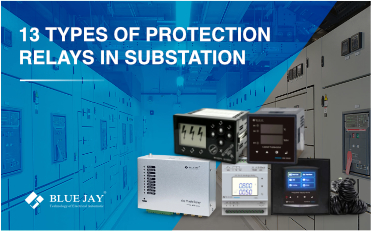
13 types of protection relays in substation
Substations rely on various types of protective relays to ensure the safety of power equipment and the stable operation of the power grid. Below, we will introduce the common types of substation protective relays one by one.
13 Types of protection relays in substation
Overcurrent Relay
Overcurrent relays are primarily utilized in substation feeder lines, medium-to-high voltage outgoing switchgear, bus sectioning cabinets, switchgear on both the high- and low-voltage sides of transformers, and ring main units. They continuously monitor circuit current in real time, triggering a trip action whenever an inter-phase short circuit occurs on a line or equipment experiences an overload; as such, they serve as the most fundamental fault protection device within a substation.
Earth Fault Relay
The Earth Fault Relay is specifically designed to monitor single-phase-to-ground faults within a power system. It is compatible with both low-current and high-current grounded grid systems; upon detecting a fault, it can issue an alarm or initiate a direct trip command to prevent the fault from propagating. This earth leakage relay is primarily deployed in substations within 10kV and 35kV line panels, busbar panels, and transformer panels.
Distance Relay (Impedance Relay)
The Distance (Impedance) Relay is primarily installed in the line panels of high-voltage transmission lines rated at 110kV and above, serving as the main protection system for these high-voltage circuits. By measuring the circuit impedance, it determines the precise location of a fault, thereby enabling accurate and reliable protection for long-distance high-voltage transmission lines.
Differential Protection Relay
The Differential Protection Relay serves as the core primary protection system for transformers, busbars, large motors, and generators within a substation. By comparing the current values at both ends of the protected equipment, it rapidly initiates a trip command—and thereby quickly isolates the faulty equipment—the moment an internal fault is detected.
Directional Overcurrent Relay
The Directional Overcurrent Relay is primarily utilized in substations for dual-source lines, ring-network lines, and tie lines. Building upon standard overcurrent protection, it incorporates power direction discrimination logic; by utilizing a directional blocking function, it effectively prevents reverse-direction faults from triggering erroneous protection operations.
Overvoltage/Undervoltage Relay
Overvoltage and Undervoltage Relays are commonly deployed in substations for busbars, incoming/outgoing line panels, capacitor banks, and generator circuits. They continuously monitor operating voltage in real-time, issuing timely alarms or initiating trip commands whenever voltage anomalies occur, thereby preventing issues such as insulation breakdown and equipment downtime caused by voltage deviations.
Frequency Relay
The Frequency Relay is primarily installed on substation-wide busbars and grid-connection circuits to monitor for anomalies in the power grid frequency. It enables functions such as low-frequency load shedding and high-frequency generator tripping, thereby helping to maintain the stable operation of the entire power system.
Digital (Microprocessor-Based) Relay
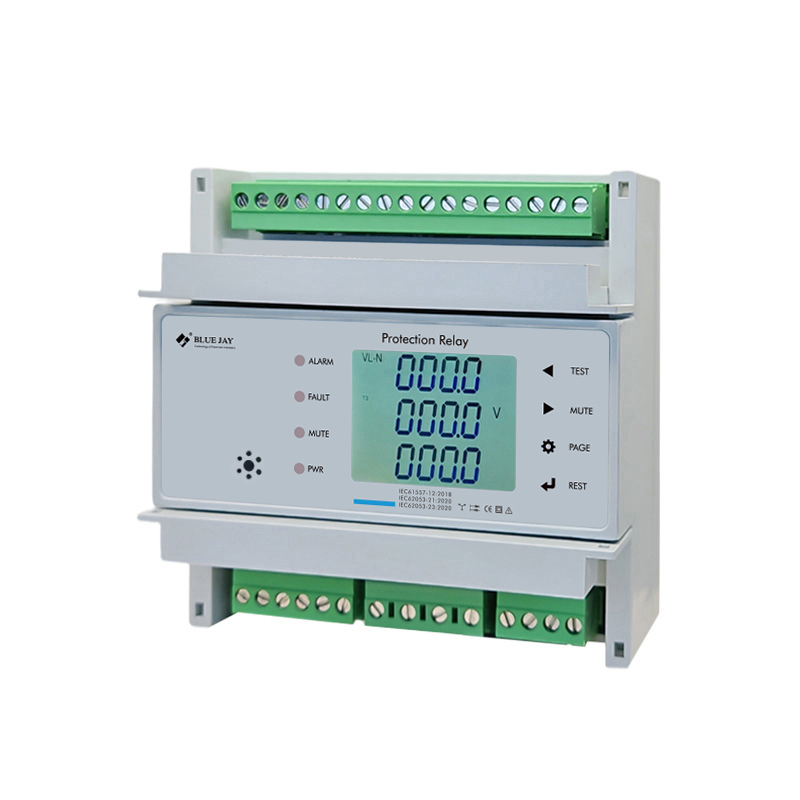
The Digital (Microprocessor-Based) Relay represents the mainstream protection device in modern substations. Typically installed within protection panels or the secondary compartments of switchgear, these relays can integrate various protection logics to provide comprehensive, multi-functional protection capabilities.
Residual Current Relay
Residual Current Relays are typically installed in low-voltage distribution cabinets within substations, outdoor compact substations, and equipment grounding circuits. They provide real-time monitoring of ground leakage currents, effectively mitigating the risks of equipment leakage faults, electric shock to personnel, and electrical fires.
Arc Flash Relay
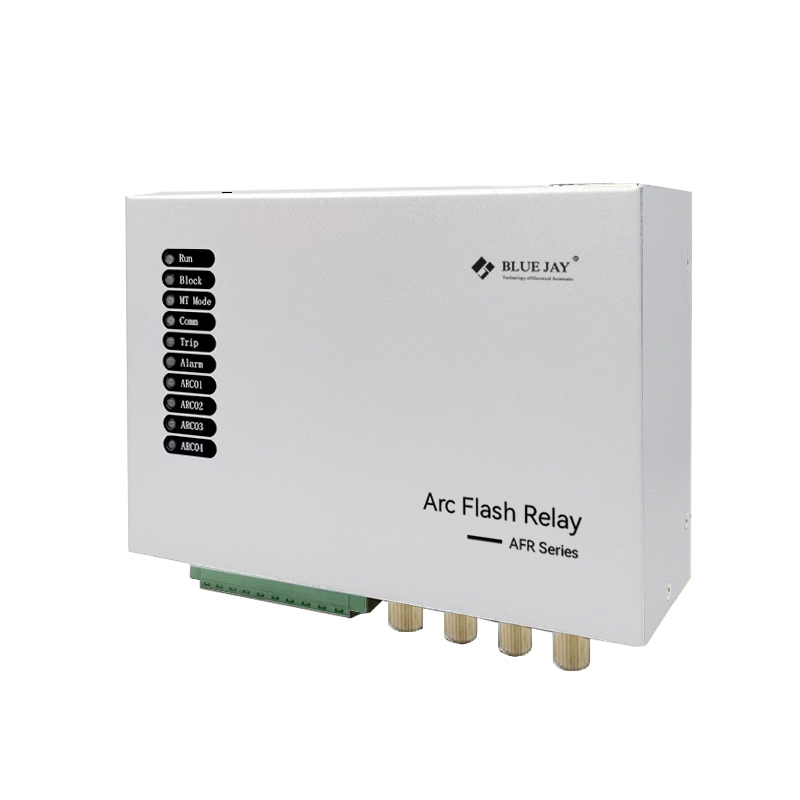
Arc Flash Relays are installed inside medium- and high-voltage switchgear within substations. By detecting arc light signals in real time, they enable rapid tripping within milliseconds, thereby preventing arc faults from damaging equipment or endangering the safety of on-site personnel.
Temperature Monitoring Relay
Temperature Monitoring Relays are deployed in substations at locations such as transformers, switchgear, and cable compartments. They provide real-time monitoring of equipment operating temperatures and immediately issue an alarm if temperatures exceed set limits, thereby preventing faults caused by equipment overheating.
Partial Discharge Monitoring Relay
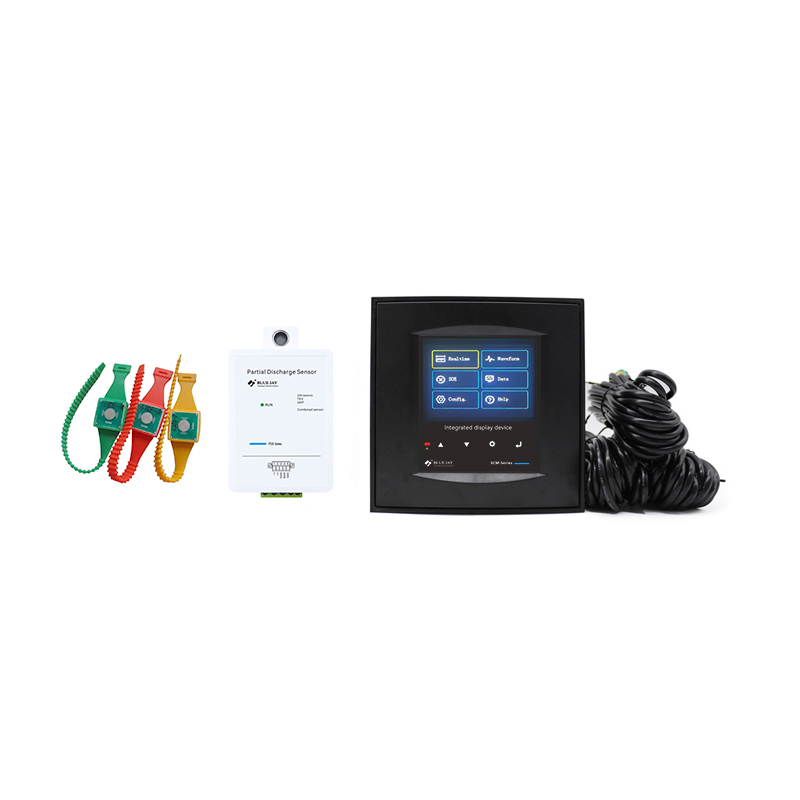
Partial Discharge Monitoring Relays are primarily deployed at high-voltage switchgear, transformers, cable terminations, and busbar equipment within substations. They monitor internal partial discharge signals in real time to identify latent faults—such as insulation aging or internal defects—and issue early warnings, thereby preventing major accidents like short circuits or dielectric breakdowns caused by insulation deterioration.
Voltage Presence Indicator
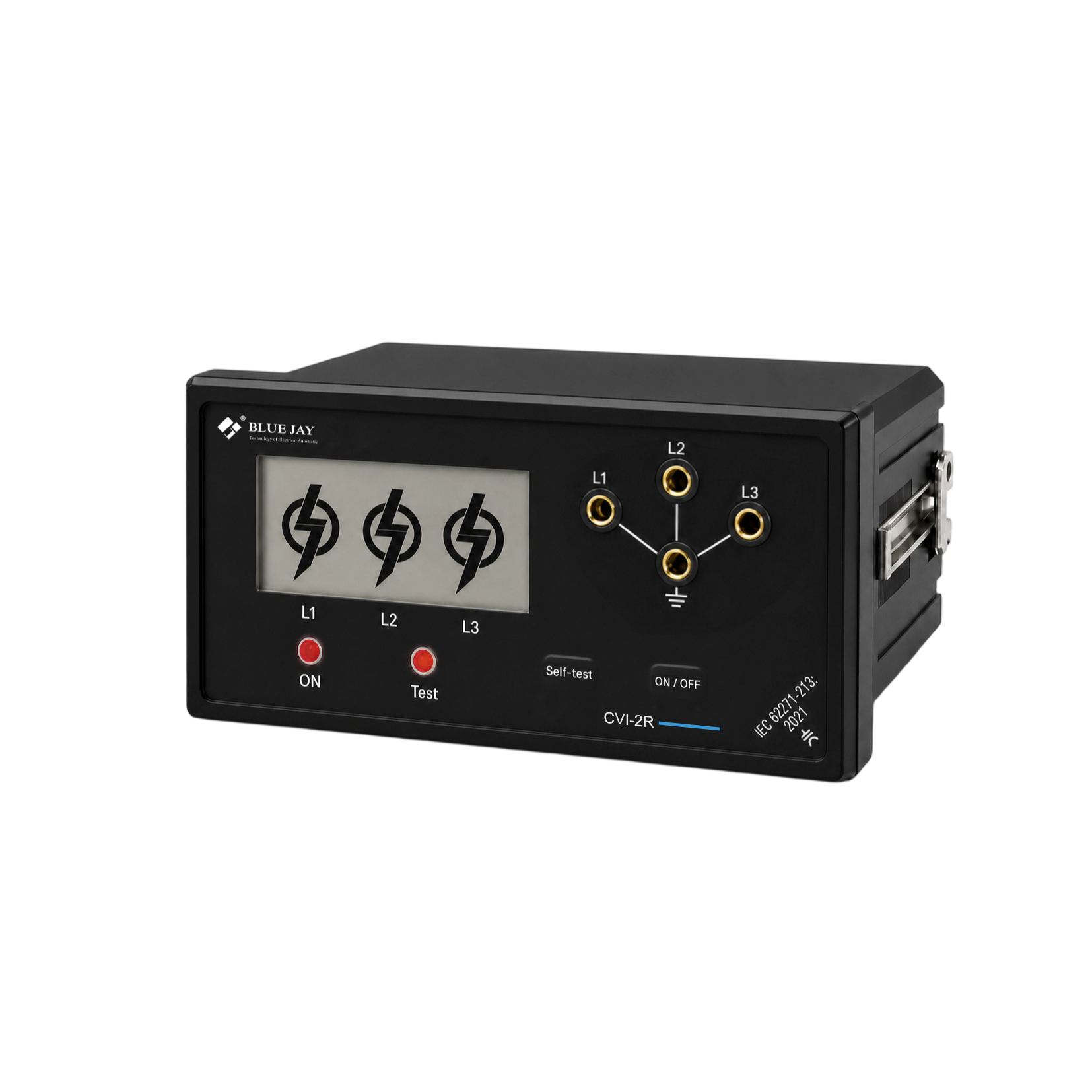
High-Voltage Presence Indicators are installed on the doors of switchgear and compact substation cabinets. They provide a visual indication of the equipment’s live status, reminding operations and maintenance personnel to adhere to proper operating procedures and effectively mitigating safety risks associated with operational errors.
The above outlines the functions and applications of the mainstream protective relays found in substations; each type of equipment fulfills its specific role, collectively safeguarding the safe and reliable operation of the substation in a comprehensive manner.