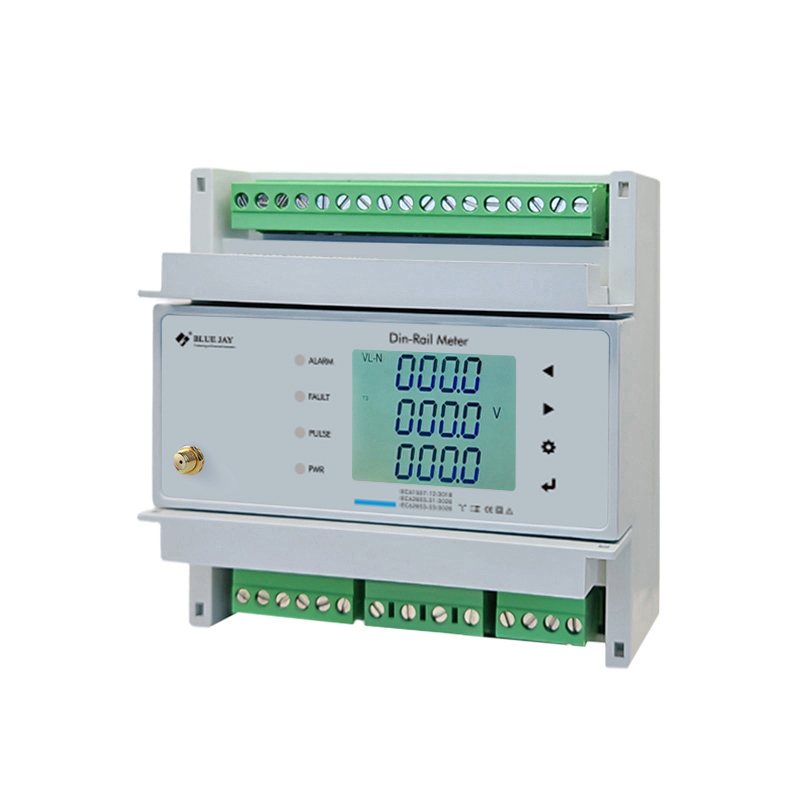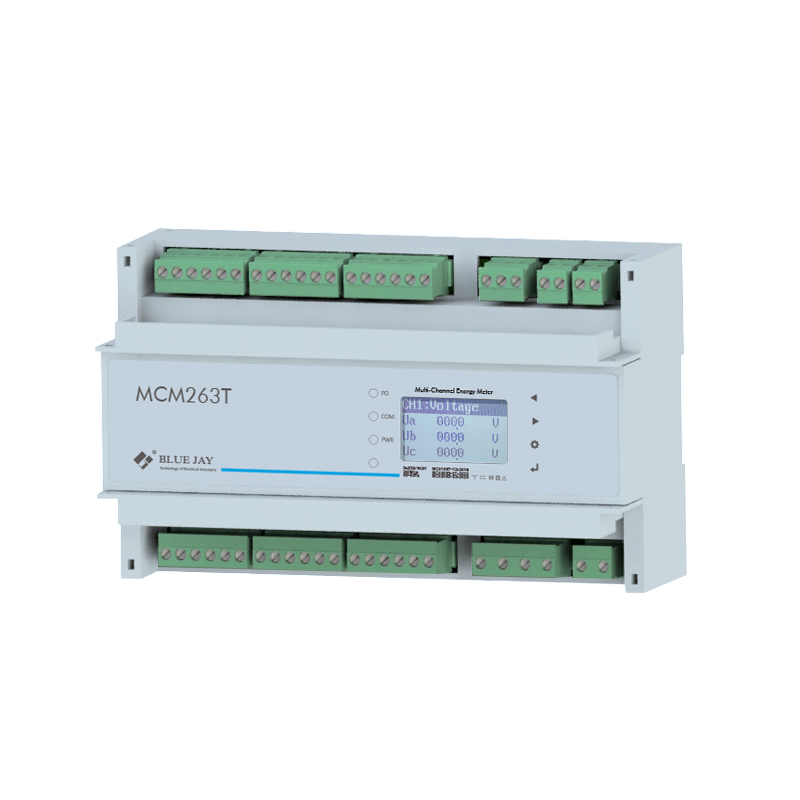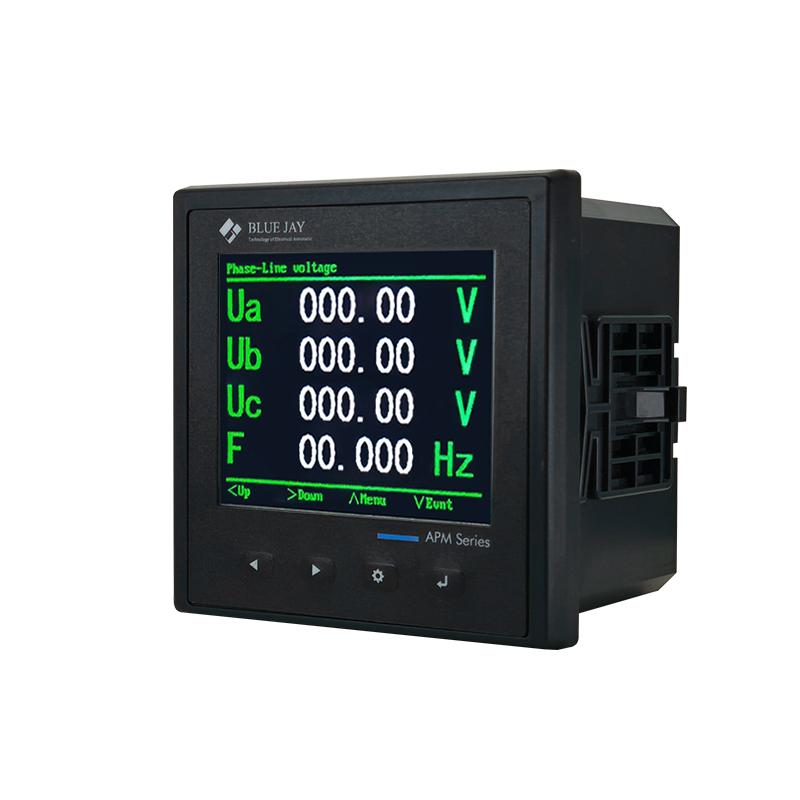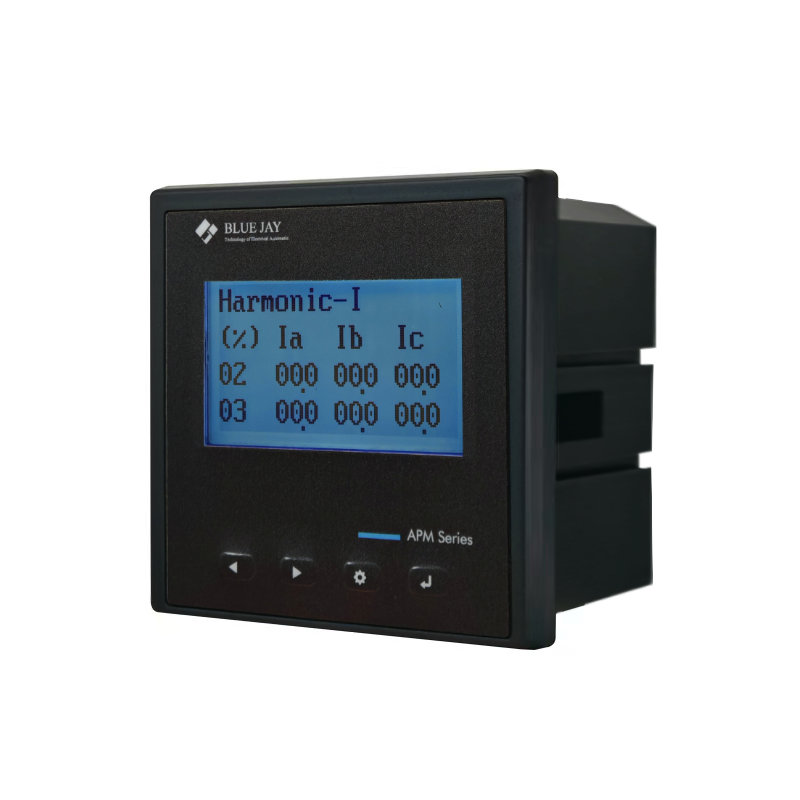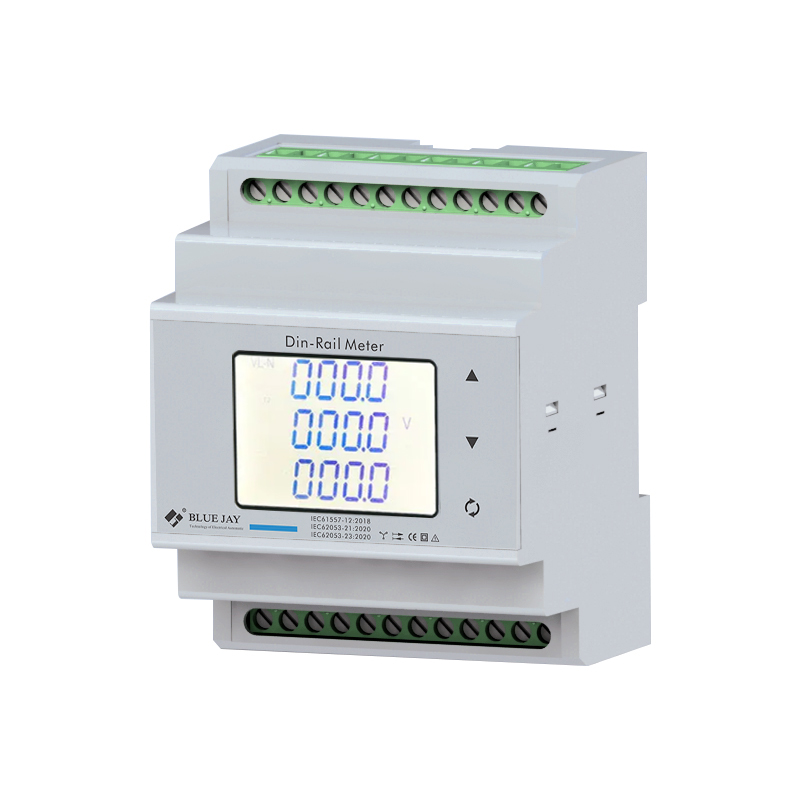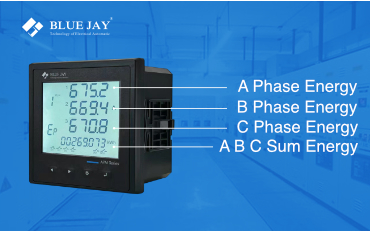
In energy metering practice, it is often observed that the sum of the three independent phase readings (A + B + C) differs from the total energy value recorded by the meter (ABC sum). This is not a meter malfunction but a type of low-load measurement deviation, commonly occurring under the following conditions:
Energy meters typically have a starting current threshold (around 0.4%–1% of Ib). When the current in a phase is below this threshold, that phase may not be registered, while other phases are being metered. This results in a discrepancy between the sum of individual phases and the total reading, which is especially noticeable under light-load conditions.
If one phase current is much smaller than the other two and close to the starting threshold, under-measurement or non-measurement may occur. Meanwhile, the total energy channel may still register partial energy, further increasing the difference between the sum of phases and the total energy.
Leakage or neutral currents can alter the current path, causing part of the current to bypass the metering circuit, which may result in smaller phase readings. However, the total energy, calculated using voltage and current vector synthesis, may differ from the sum of the phases.
In systems with abundant harmonics, meters may inadequately respond to high-frequency components, leading to some harmonic currents not being counted. Phase angle errors can also affect active energy calculation, amplifying the difference between the sum of phases and the total reading.
According to standards such as IEC 62053 and IEEE Std 1459, meter accuracy is primarily verified at rated current or above, with no strict requirements for low-current regions. Therefore, such deviations are within the allowable range of the standards.
Differences between individual phase readings and the total energy in three-phase meters are normal under conditions of low current, leakage, unbalance, or harmonics. In engineering practice, the total energy (ABC sum) should be used as the settlement basis, while phase energy is only for monitoring reference. For applications requiring high accuracy at low current, it is recommended to use high-precision meters (e.g., class 0.5S) or smart meters equipped with low-current compensation and harmonic processing algorithms to improve reliability.