Arc Flash Relay Configuration for sectionalized single busbar system
What is sectionalized single busbar system? A segmented single
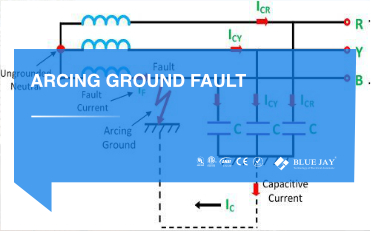
Arcing Ground Fault is a type of ground fault occurring when a high-temperature, unstable electrical arc forms between a phase conductor and ground. In ungrounded three-phase systems, the arc is sustained by capacitive currents and may generate overvoltages. In solidly grounded systems, the fault may involve high currents and present significant arc flash hazards.
Arcing ground faults typically result from insulation degradation, mechanical damage, or contamination of electrical equipment. Common causes include:
-. Aging insulation materials and thermal deterioration.
-. Moisture, dust, or conductive foreign particles creating partial paths.
-. Loose connections or physical damage to conductors.
-. Overvoltage conditions or transient events initiating an arc.
Arcing ground faults can lead to catastrophic consequences if not promptly mitigated.
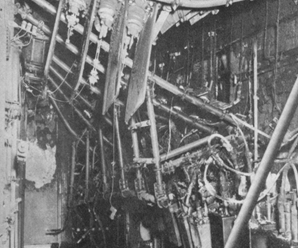
Equipment Damage: High-energy arcs can melt busbars, cables, and switchgear components, causing long downtime and high repair costs.
Fire Hazard: Electric arcs may ignite nearby flammable materials, posing fire hazards in substations and industrial facilities.
Operational Disruption: Arcing ground faults often lead to unexpected tripping or prolonged outages, impacting production continuity.
Personnel Safety Risk: Arc flashes release intense heat and light, posing severe risks of burns, blindness, or other injuries to maintenance personnel.
Voltage Distortion: In ungrounded or high-impedance grounded systems, arcs can cause overvoltages and transient disturbances, damaging sensitive electronics.
Sensing Arc Ground Faults Using a Zero Sequence (Core Balance) CT
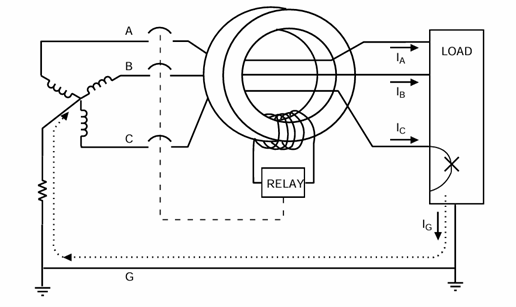
A zero‑sequence CT (core balance CT) sleeves all three‑phase conductors. Under normal conditions, the vector sum of phase currents is zero, and the secondary output is zero. When a single‑phase ground fault occurs, a zero‑sequence current appears. The relay detects the zero‑sequence current magnitude, duration, and variation to identify arcing ground faults. This method is simple in structure and widely used in low‑voltage and medium‑voltage systems.
Sensing Arc Ground Faults Using Residually Connected CTs
Three individual phase CTs are connected in residual mode. The secondary currents are combined to output zero‑sequence current. This scheme is suitable for scenarios where installation space is limited or a core‑balance CT cannot be installed. It can realize residual current detection and cooperate with definite‑time or inverse‑time protection criteria.
A zero‑sequence CT (core balance CT) sleeves all three‑phase conductors. Under normal conditions, the vector sum of phase currents is zero, and the secondary output is zero. When a single‑phase ground fault occurs, a zero‑sequence current appears. The relay detects the zero‑sequence current magnitude, duration, and variation to identify arcing ground faults. This method is simple in structure and widely used in low‑voltage and medium‑voltage systems.
Sensing Arc Ground Faults Using Residually Connected CTs
Three individual phase CTs are connected in residual mode. The secondary currents are combined to output zero‑sequence current. This scheme is suitable for scenarios where installation space is limited or a core‑balance CT cannot be installed. It can realize residual current detection and cooperate with definite‑time or inverse‑time protection criteria.
AFCI/AFDD: Identify arc characteristics by detecting high‑frequency harmonic components and arc waveform variations. Mainly applied in low‑voltage terminal power distribution, they effectively protect against low-energy series arcs.
GFCI / RCD: Primarily focused on personal electric shock protection, these devices quickly cut off power when residual current exceeds the threshold. Their effectiveness against high‑resistance, low‑current arcing ground faults is limited, but they remain essential for personnel safety.
Zero‑sequence protection relay: Provides ground fault protection based on zero‑sequence current. Widely used, it ensures reliable tripping for conventional faults but may have longer response times in high-resistance arcing ground scenarios.
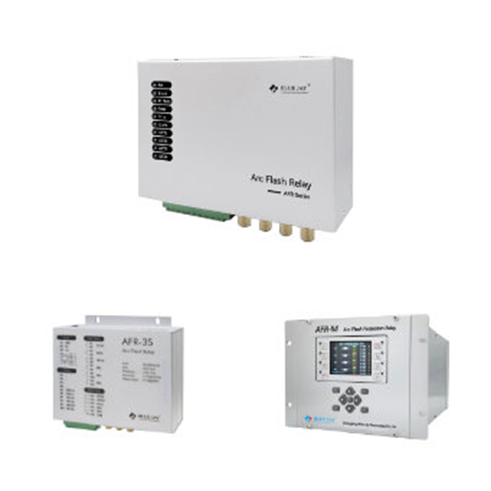
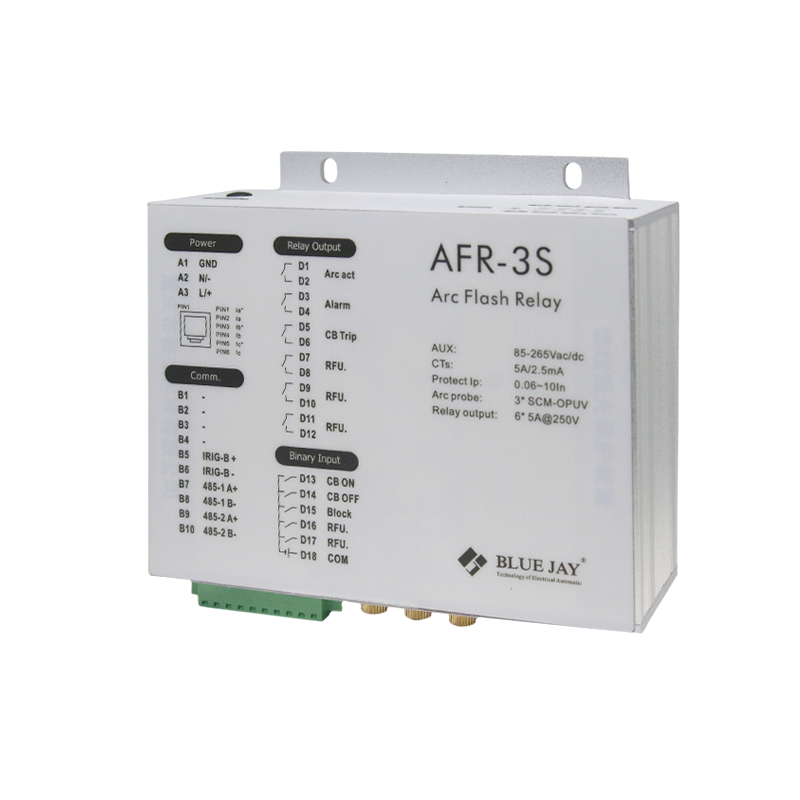
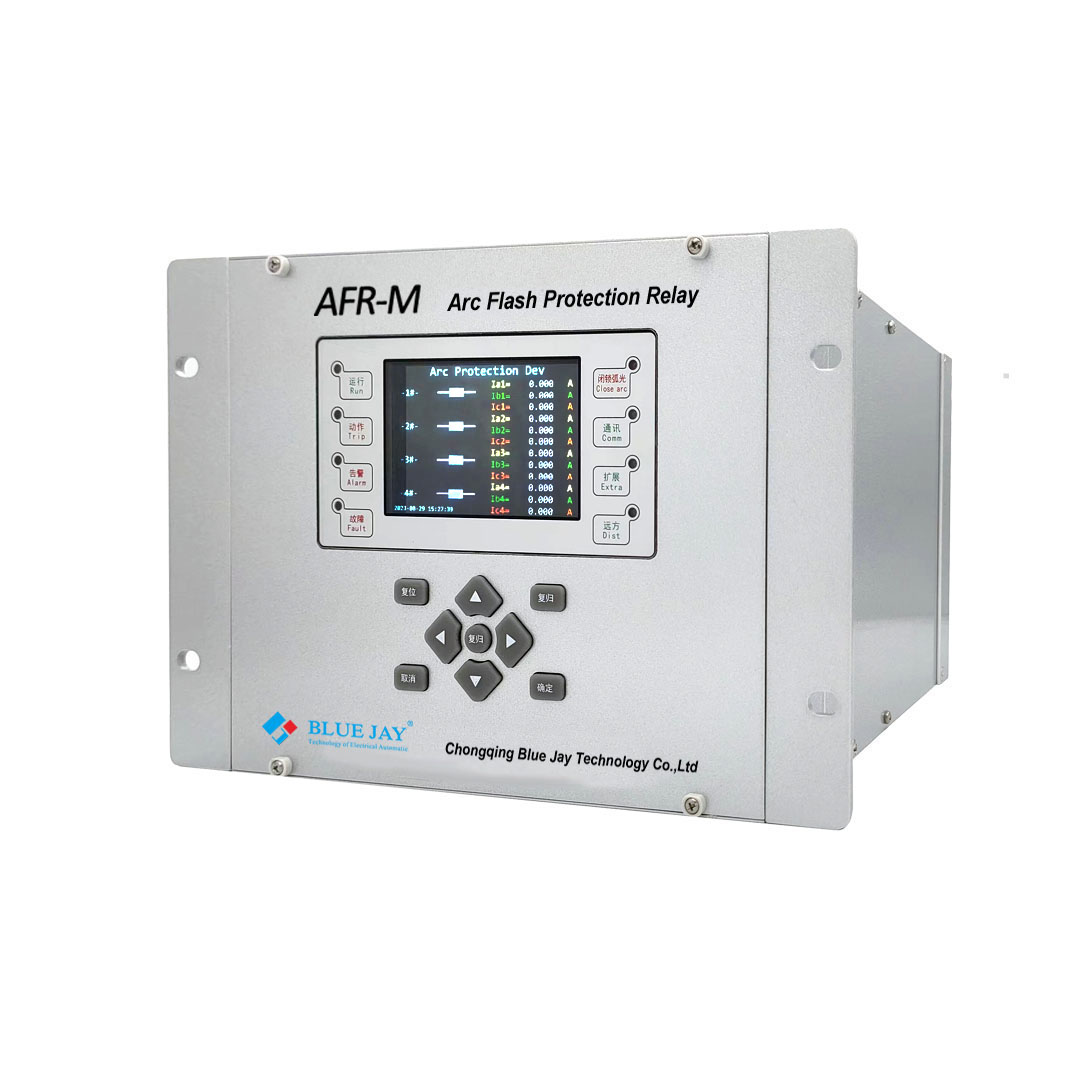
Arc Flash Protection Relay: Blue Jay delivers a professional, systematic, and customizable solution for arcing ground fault and arc flash protection in medium‑voltage and high‑voltage switchgears, transformer compartments, generator control panels, energy storage systems, and industrial power distribution systems.
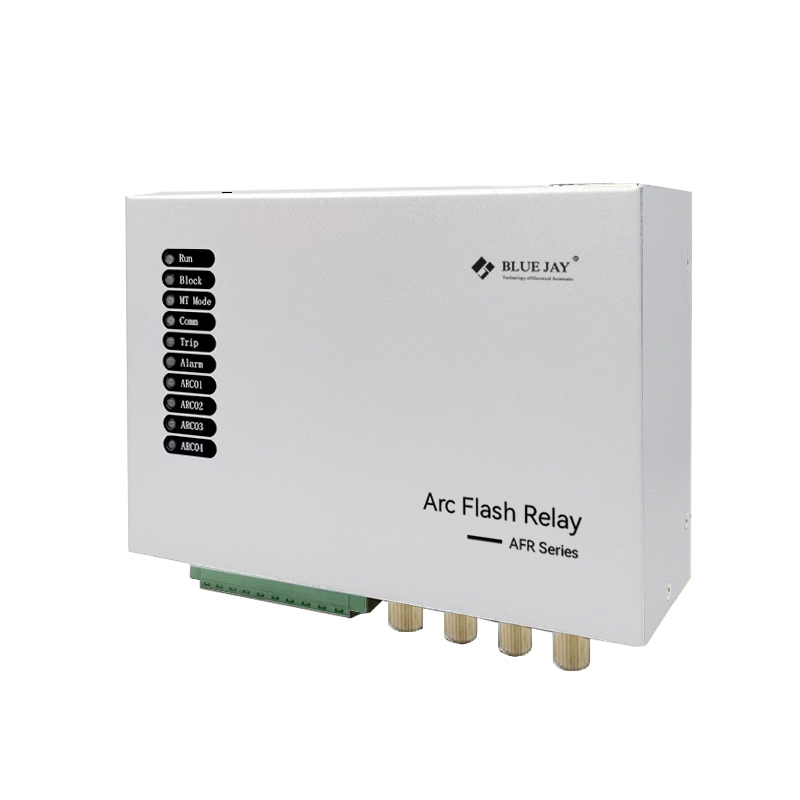
Blue Jay Multi channel arc flash relay
It adopts optical + current dual‑parameter detection, capturing arc light within milliseconds while monitoring current to drive immediate circuit breaker tripping. This approach forms the core solution for mitigating high-energy arc flashes and arcing ground faults, complementing other protection devices to enhance overall system safety and reliability.
Arcing ground faults pose significant risks to electrical systems, including equipment damage, fire hazards, operational interruptions, and personnel injury. Early detection using zero-sequence CTs, residual current sensing, and arc flash relays is essential to mitigate these risks. While AFCI, GFCI, and zero-sequence relays provide important foundational protection, integrated solutions such as Blue Jay’s optical + current dual‑parameter arc flash relays offer the fastest, most reliable defense, ensuring rapid fault clearance and overall system safety.

What is sectionalized single busbar system? A segmented single

Is there any difference between arc flash relays and

Arc flash mitigation methods, also called arc flash mitigation