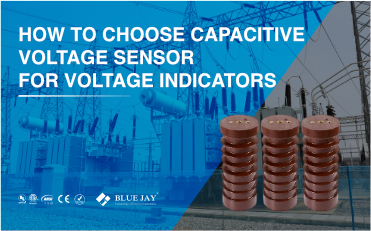
How to Select the Right Capacitive Voltage Indicator
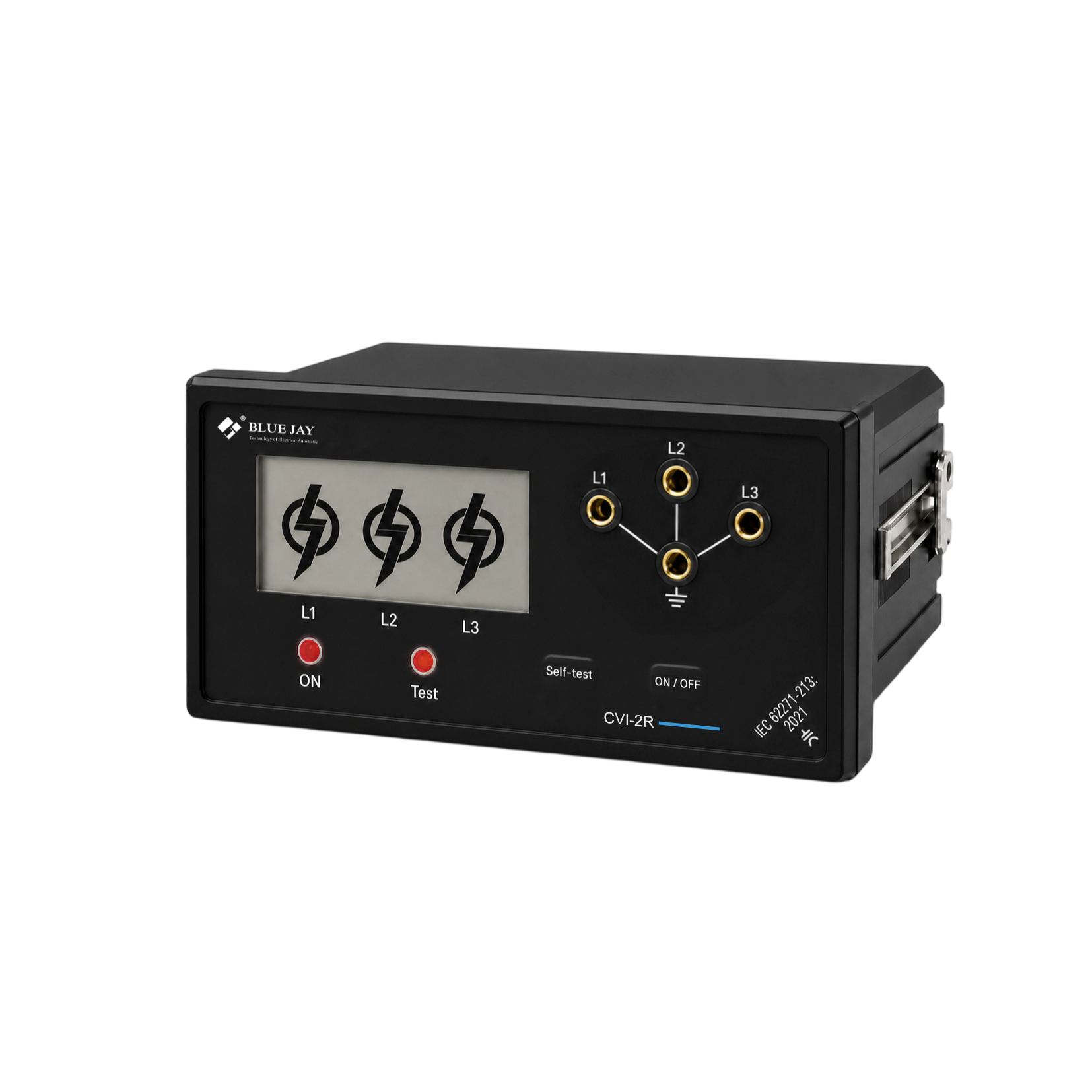
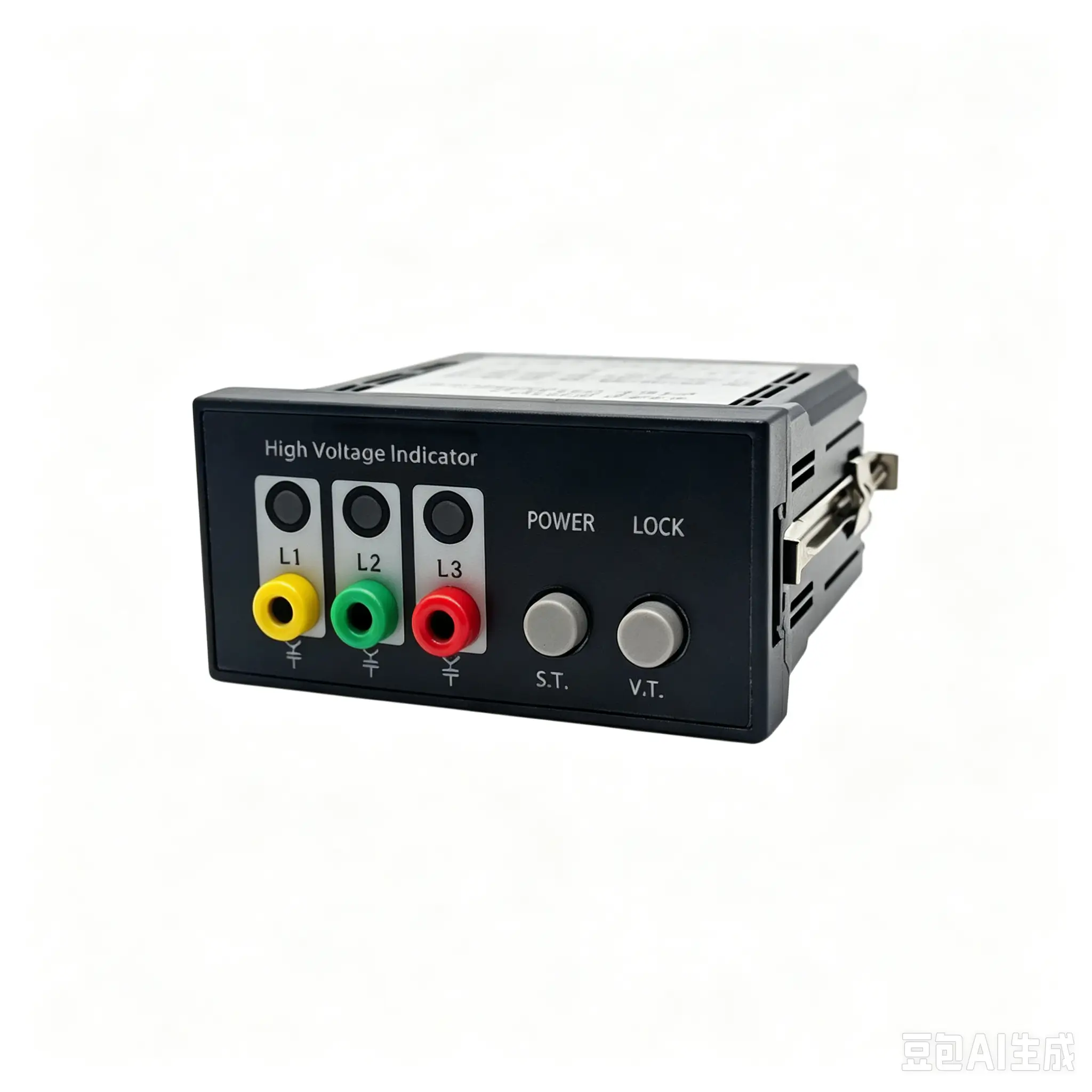
A Capacitive Voltage Indicator (CVI) is widely used in
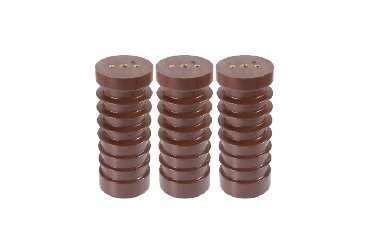
Capacitive voltage sensors—comprising a capacitive insulator, a coupling electrode, and the capacitive sensing element itself—typically operate in conjunction with capacitive voltage indicators within medium-voltage distribution cabinets. The fundamental principle underlying these sensors is capacitive voltage division. They function essentially as specialized capacitors—a key distinction that sets them apart from standard insulators.
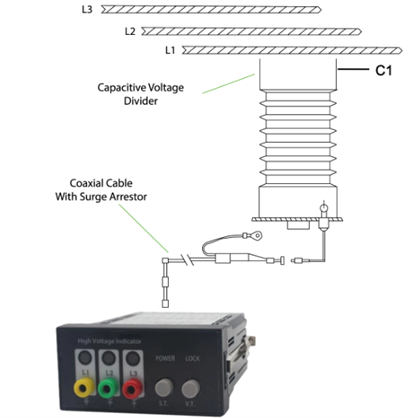
The sensor component of a capacitive voltage indicator is, in essence, a high-voltage-side capacitor (C1) connected in series within the high-voltage circuit. Its core design logic centers on limiting the circuit current through capacitive reactance (Xc) to ensure operational safety. The sensor’s capacitive reactance (C1) works in tandem with the input impedance (specifically, the low-voltage-side capacitor C2) located inside the voltage indicator unit to form a capacitive voltage divider. The proper functioning of this capacitive voltage divider relies entirely on the precise impedance matching between C1 (the sensor) and C2 (the internal component of the indicator).
The high voltage from the power line is divided across the series combination of C1 and C2; the sensor (C1) bears the majority of the voltage drop, while the voltage indicator (C2) handles the smaller portion. This voltage is stepped down to a safe, low-voltage signal—typically in the 50–60V range—which is then fed into the high-voltage live-line indicator unit. Internal circuitry processes this signal to facilitate the display, status determination, and interlocking functions associated with the high-voltage live-line condition.
Taking a 35kV, 50Hz system with a 100pF (100×10−12F) sensor as an example, we calculate the capacitive reactance using the formula Xc=1/2Πfc, resulting in a value of 31.8 MΩ. This megaohm-level reactance limits the circuit current to approximately 0.635mA (microamp range) for the 35kV system (with a phase voltage of ~20.2kV), eliminating electric shock risk, minimizing power consumption and heat generation, and ensuring long-term reliable operation.
The sensor (high-voltage arm C1) works with the input impedance (low-voltage arm C2) inside the voltage indicator to form a capacitive voltage divider, stepping down the high line voltage to a safe 50-60V signal. This low-voltage signal is processed by the indicator to accurately detect and display live voltage status.
When selecting a sensor, its capacitance must be matched to that of the high-voltage live-line indicator. The capacitance value of a capacitive voltage indicator sensor depends on factors such as the equipment’s rated voltage; generally, the higher the voltage, the lower the capacitance. Based on industry experience, for 10kV-class capacitive voltage indicators, the standard capacitance value for the capacitive core is typically selected as 115 pF, while for the 35kV class, it is approximately 45 pF.
The following table lists common high-voltage live-line indicator sensors, matched to the appropriate capacitance values based on voltage class: Equipment Rated Voltage/ Standard Capacitance for High-Voltage Live-Line Indicator Sensor
12kV: 100–150 pF / 80–120 pF
24kV: 60–90 pF / 50–75 pF
36kV / 40.5kV: 35–60 pF / 35–50 pF
72.5kV: 15–30 pF
145kV: 5–15 pF
In summary, capacitive voltage sensors are essential and safe auxiliary components for medium-voltage power distribution systems. With reliable capacitive voltage division and rational impedance matching, they effectively convert high voltage into detectable low-voltage signals to realize live line indication and interlock protection. Reasonable capacitance selection corresponding to different voltage levels further ensures the overall stability and safety of high-voltage equipment operation, making these sensors widely applicable in modern power distribution cabinet monitoring scenarios.

A Capacitive Voltage Indicator (CVI) is widely used in

According to the voltage thresholds for voltage indication in

Understanding voltage classification is essential for the proper application