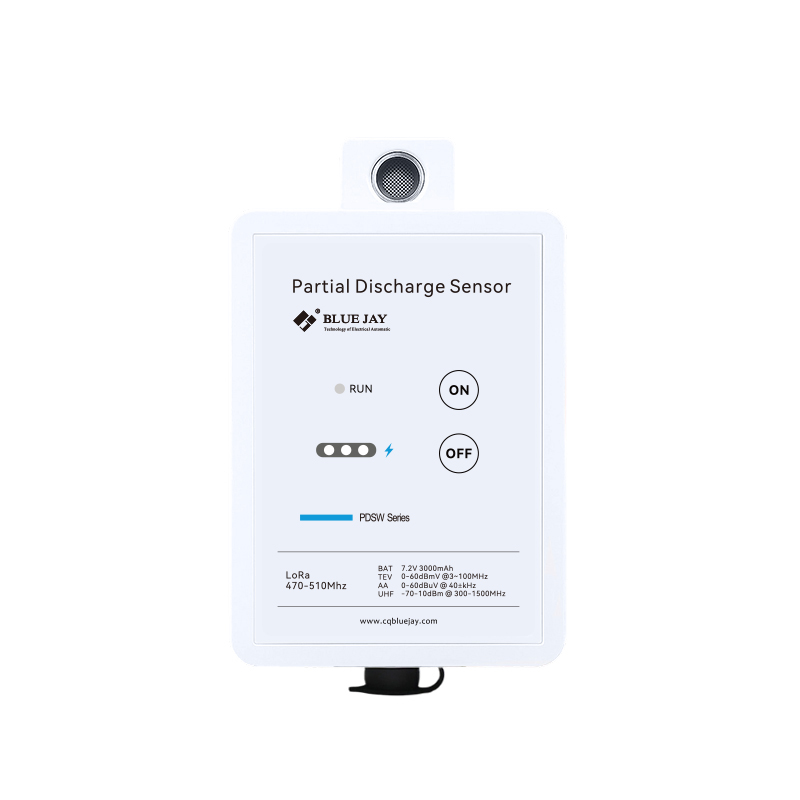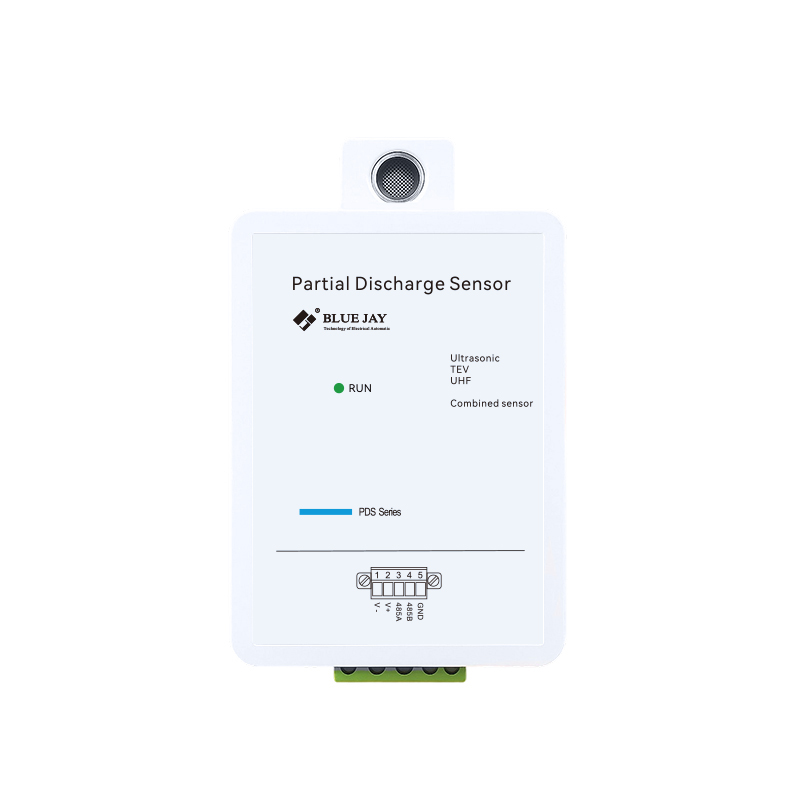
The SCM-PDS3 Partial Discharge (PD) Sensor communicates with the host system through an RS-485 interface. In some cases, the communication parameters may be changed accidentally or the configured device ID may be unknown, which can prevent normal communication.
This guide provides simple procedures for identifying the current baud rate and device ID of the SCM-PDS3 PD Sensor, helping users quickly restore communication without unnecessary troubleshooting.
If the baud rate has been changed accidentally, switch the baud rate one by one in the serial communication tool (e.g. 4800, 9600, 19200, …). and then using the RS-485 interface in ASCII mode, send the following string:
lzt+++
The baud rate at which the device returns the response shown below is the current baud rate configured in the product.
Example:
No response at 4800 or 9600.
A response is received at 19200. This indicates that the current device baud rate is 19200 bps.
The method for identifying the current device ID depends on the firmware version of the SCM-PDS3 PD Sensor.
If you are unsure which firmware version your device uses, please contact your Blue Jay sales representative for assistance before proceeding. Then select the appropriate procedure based on the firmware release date.
| Before 2025.11 | The device ID cannot be queried. If the ID is unknown, the unit must be returned to FATO for service. |
| 2025.11- 2026.7.10 | (Older firmware):
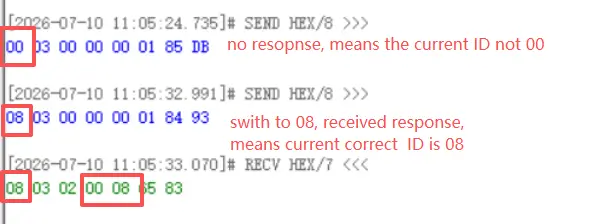
The current device ID can be identified by sending the broadcast command. However, you must manually test each possible ID (1–255).
Send the command using each ID in sequence. Which ID that receives a valid response is the current device ID.
![]() |
| After 2026.7.10 | (New firmware): Simply send the example command exactly as provided, without any modification. The device will automatically return its current ID information. |
By following the procedures above, users can quickly identify the baud rate and device ID of the SCM-PDS3 PD Sensor, simplifying communication troubleshooting and helping to efficiently restore reliable RS-485 communication.