Oil filled vs dry type transformer
When selecting equipment for industrial power distribution, data centers, or renewable energy sites, the choice between dry-type and oil-immersed transformers is the first step in the engineering decision-making process. Regardless of the type chosen, insulation degradation and overheating—driven by long-term high-load operation and environmental stress—are the common culprits behind catastrophic transformer failures.
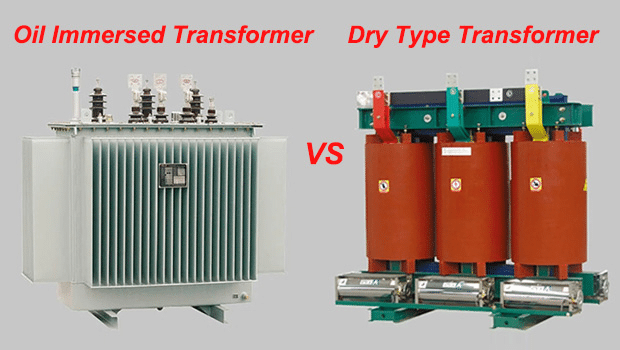
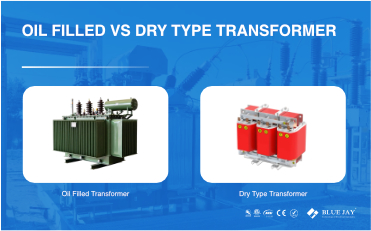
Oil-Filled vs. Dry-Type Transformers - What are the differences?
| Comparison Dimension | Oil-filled Transformer | Dry-type Transformer |
| Definition | A transformer in which the core and windings are completely immersed in insulating oil (such as mineral oil or natural esters), utilizing the oil as both an insulating and heat-dissipating medium. | A transformer in which the core and windings are directly exposed to air or encapsulated in solid epoxy resin, and which does not use any liquid as the primary insulating medium. |
| Insulation and Cooling | Insulation: An oil-paper insulation system composed of insulating oil and insulating paper/paperboard. | Insulation: Solid insulation via epoxy resin casting or Nomex/VPI impregnation; air gaps also contribute to insulation. |
| Cooling: Transformer oil transfers heat from the core and windings to the tank walls or radiator fins via thermal convection, subsequently dissipating the heat into the air or water. Common cooling methods are ONAN and ONAF. | Cooling: Heat dissipation occurs primarily through air convection and thermal radiation at the insulation surfaces; cooling methods include natural air cooling (AN) and forced air cooling (AF). Heat dissipation can be enhanced by installing fans. | |
| Partial Discharge Characteristics and Monitoring | Discharge types: Internal air-gap discharge caused by gas bubbles, impurities, or moisture in the oil; discharge from sharp points or floating potentials. | Discharge types: internal void discharge within casting defects, surface tracking, phase-to-phase arcing, and discharge from winding leads to ground. |
| Associated phenomena: Partial discharge causes the decomposition of insulating oil, generating characteristic gases such as hydrogen and acetylene. | Associated phenomena: Partial discharge directly causes resin carbonization and cracking, accompanied by audible sound waves and electromagnetic pulses. | |
| Recommended monitoring: UHF sensors mounted on the oil drain valve and HFCTs clamped onto the grounding lead, combined with dissolved gas analysis (DGA), enable accurate identification of discharge types and severity. | Recommended monitoring: Non-contact ultrasonic (AA) sensors and transient earth voltage (TEV) sensors, attached to the equipment surface to detect and locate discharges. | |
| Temperature Characteristics and Monitoring | Thermal behavior: High thermal capacity results in slow oil temperature fluctuations; however, internal winding hotspot temperatures can significantly exceed the top-oil temperature, leading to measurement lag. | Thermal behavior: The thermal time constant is low, and winding temperature rises extremely rapidly—especially if forced air cooling fails; due to the poor thermal conductivity of epoxy resin, internal hot spots can easily exceed the insulation’s thermal rating. |
| Traditional measurement: Oil temperature gauges or winding temperature indicators respond slowly and cannot capture transient hotspots. | Traditional measurement: Uses PTC thermistors for point-based monitoring of low-voltage windings; high-voltage windings often lack measurement points, and the setup has poor interference immunity. | |
| Recommended monitoring: Fiber-optic winding temperature sensors embedded directly within the winding discs to measure actual hotspots, combined with oil temperature sensors to enable dynamic load management. | Recommended monitoring: Fiber Bragg Grating (FBG) or semiconductor-based fiber-optic temperature sensing; offers immunity to electromagnetic interference, allows for multiple measurement points in series, and enables direct surface mounting or embedding within high- and low-voltage windings for comprehensive monitoring without blind spots. | |
| Overload and Thermal Time Constant | High thermal capacity and a long thermal time constant (on the order of hours) provide strong short-term overload capability, allowing for operation exceeding nameplate capacity for certain periods, provided that hotspot and oil temperature limits are not persistently exceeded. | It features low heat capacity and a short thermal time constant (on the order of minutes); once the epoxy resin’s thermal rating (e.g., Class F at 155°C or Class H at 180°C) is exceeded, the insulation rapidly becomes brittle. Overload capacity is strictly limited, and a fan stoppage can lead to immediate, short-term overheating. |
| Application Scenarios | Outdoor step-up substations, power plant main transformers, high-capacity power transmission hubs, and industrial zones with independent fire-separation barriers—particularly in high-voltage, ultra-large-capacity applications. | Suitable for locations with high fire-safety requirements, high population density, and compact spaces—such as indoor power distribution rooms, commercial complexes, data centers, hospitals, rail transit facilities, and offshore platforms. |
| Maintenance Method | Requires periodic sampling for dissolved gas analysis (DGA) and oil quality testing, as well as leak detection and breather maintenance; internal inspections (lifting the core) may be required, resulting in high maintenance workloads and costs. | Maintenance is free from liquid-related tasks; it primarily involves periodically removing surface dust, tightening connections, and inspecting insulation surfaces for cracks or tracking—procedures that are relatively simple. However, should internal partial discharge or cracking occur, repair is extremely difficult, and replacement is usually the standard course of action. |
Why is transformer temperature and partial discharge (PD) monitoring necessary?
Transformers face two major risks: accelerated insulation damage due to high temperatures and short circuits or fires caused by hidden partial discharge—neither of which can be detected early through manual inspections. Oil-immersed transformers feature sealed tanks that hide signs of oil temperature issues or internal PD faults, creating risks of explosion and oil leakage.
Dry-type transformers suffer from poor heat dissipation; overload-induced high temperatures can crack their epoxy casings, and PD faults within enclosed equipment rooms can cause collateral damage to sensitive loads.
Therefore, integrating temperature and PD monitoring equipment is essential to provide early warnings and prevent safety incidents and downtime losses.
Blue Jay Transformer Temperature and PD Monitoring Solutions
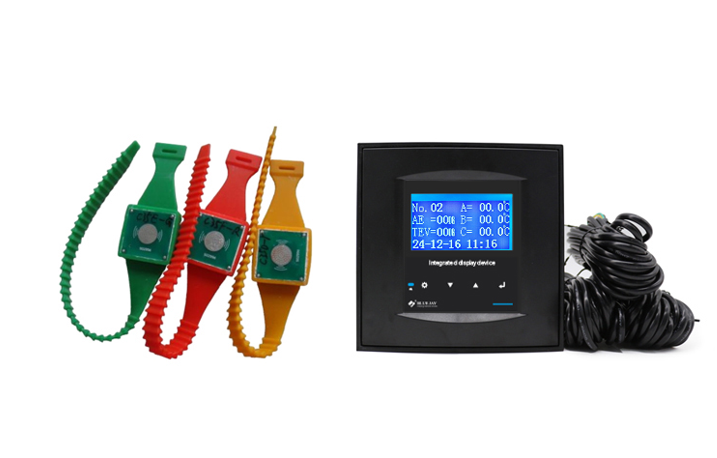
1. Independent temperature monitoring
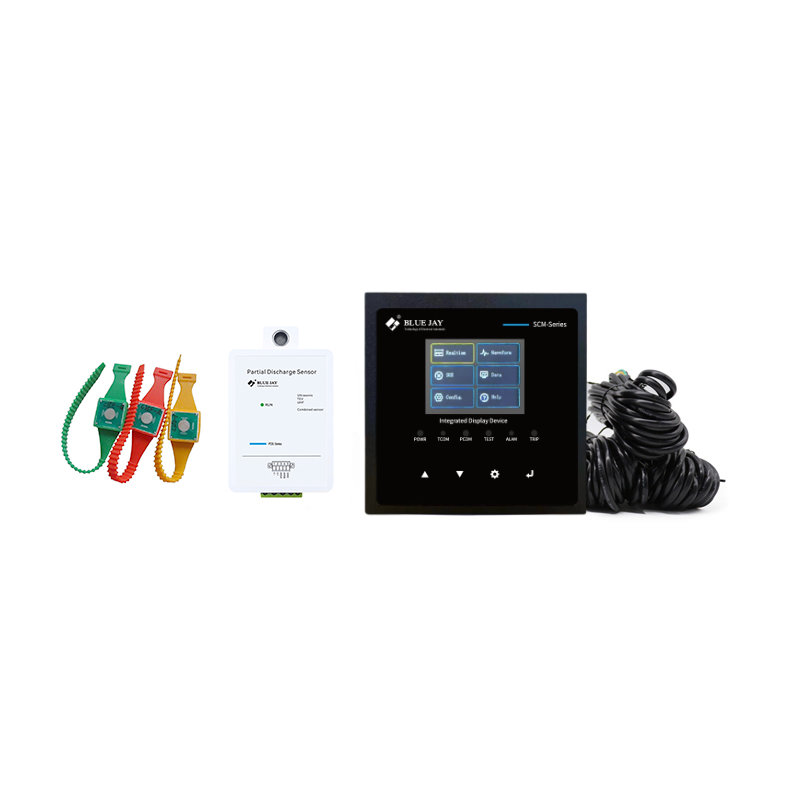
Equipped with 433MHz battery-powered wireless temperature sensors, this solution monitors transformer busbars and contacts in real time, supporting up to 24 three-phase sensor sets. The SCM-TP1000 unit displays real-time readings and 6-day temperature curves, and outputs relay alarms for over temperature faults.
With quick live-line installation and 2–4 years of sensor lifespan, it connects to SCADA via Modbus-RTU, ideal for projects only requiring thermal fault warning.
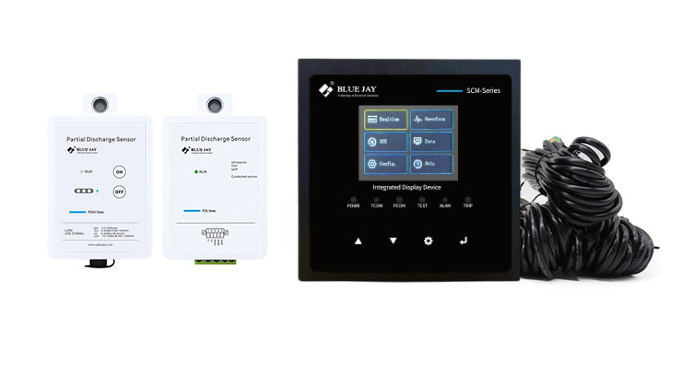
2. Independent partial discharge (PD) monitoring
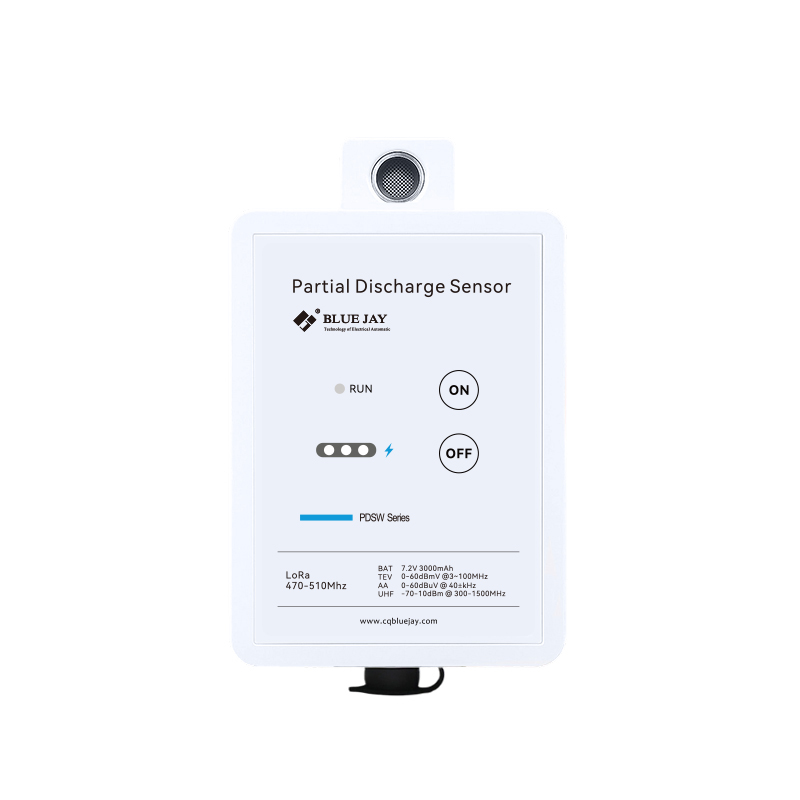
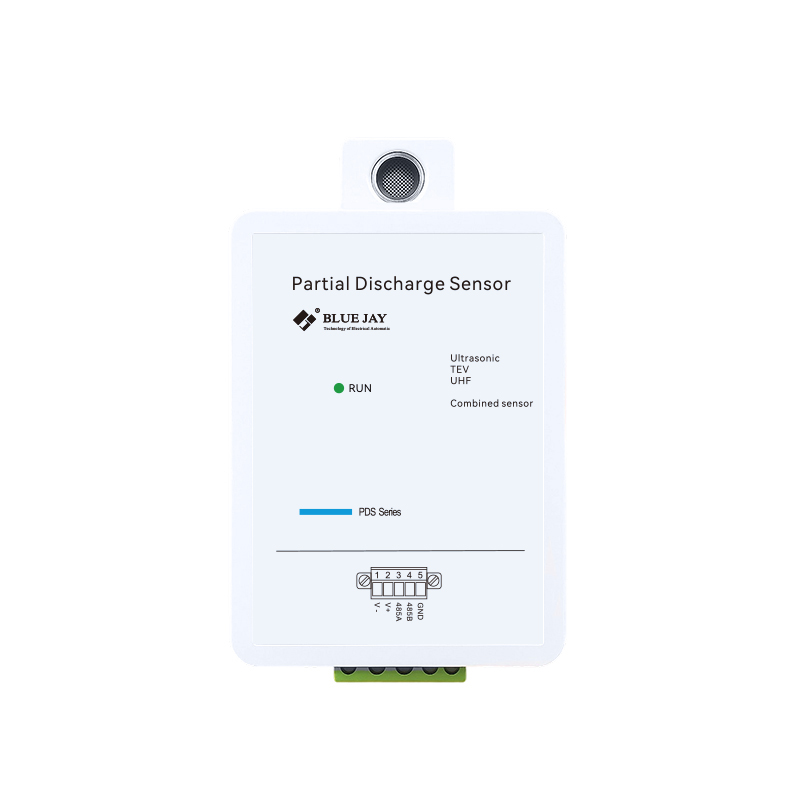
It adopts wired/wireless 3-in-1 AA/TEV/UHF PD sensors to capture multi-band discharge signals and detect transformer insulation defects. The host evaluates insulation health, stores SOE fault waveforms for maintenance tracing.
Magnetic sensors can be mounted without power cut; LoRa wireless transmission delivers strong anti-interference performance, perfect for unattended substations and new energy power plants focusing on insulation risks.
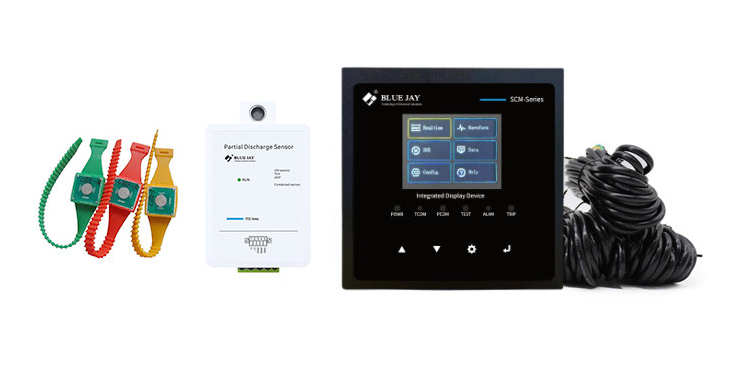
3.Integrated temperature and PD monitoring
The SCM-TP1000 all-in-one panel meter integrates wireless temperature tracking and multi-mode PD detection, supporting 24 temp sensor groups and 6 PD sensor groups. Users can check real-time data, temperature and PD waveforms on the touch screen.
It provides dual alarm relays and saves 99 waveform-attached fault records. One host covers both thermal and insulation monitoring to cut hardware and wiring costs, the top pick for medium-voltage cabinet and substation intelligent upgrades.
Conclusion
Oil-filled and dry-type transformers have distinct structural differences but both face hidden risks of overheating and insulation aging. Blue Jay provides three matched monitoring schemes for separate temperature monitoring, separate PD monitoring and integrated dual-function monitoring. All solutions support wireless live installation, SCADA communication and fault alarm recording, offering cost-effective full-condition monitoring to avoid transformer faults and power outages across all power distribution scenarios.