
Arc Flash Sensor – A Comprehensive Guide
What is an arc flash sensor?
Arc flash sensors are used to detect the intensity of arc light within power systems and transmit the corresponding signals to arc flash relays, which then determine—based on the intensity—whether to cut off the system’s power supply. Consequently, these sensors play a critical role in the overall arc flash protection system.
How does an arc flash sensor work?
The arc flash sensor serves as the core front-end detection component of the protection system, primarily designed to capture arc light signals generated by short-circuit faults in high-voltage switchgear and power distribution cabinets in real time. When a fault produces an arc, the sensor probe captures the high-intensity optical signal and transmits it to the arc flash protection master control unit via a dedicated link. The master control unit identifies, analyzes, and logically evaluates the signal to rapidly trigger the circuit breaker, isolating the faulty circuit; this action suppresses the spread of the arc and ensures the safety of both electrical equipment and maintenance personnel.
Arc flash sensors are categorized into active and passive types based on their power supply method, signal conversion location, and transmission medium; there are fundamental differences in the underlying operating mechanisms and safety performance between these two types.
Types of Arc Flash Sensors
Based on their operating principles, arc flash sensors can be categorized into two types: active sensors and passive sensors.
Active Arc Flash Sensors: These typically require an external power supply to operate. Light signals captured at the probe are converted into electrical signals and transmitted to the arc flash protection device via stranded copper wire. This wiring connects the primary high-voltage compartment of the switchgear to the secondary low-voltage compartment; the lack of electrical isolation between the primary and secondary sides may lead to signal interference and potential electric shock risks.
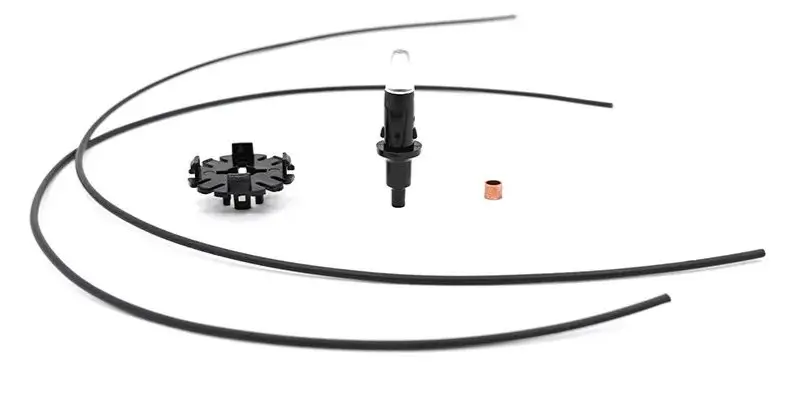
Passive Arc Flash Sensors: In systems using passive sensors, the captured light signal is transmitted via optical fiber to the main control unit, where it is converted into an electrical signal for processing. This process requires no external power supply and is immune to electromagnetic interference, offering exceptional signal stability and eliminating potential high-voltage shock risks. Consequently, passive optical sensors with fiber-optic transmission are recommended.
As a type of modern optical sensor, arc flash sensors can also be classified by shape into two categories: point-type sensors and strip-type sensors.
Point-type Arc Flash Sensors: These are recommended for areas with well-defined, regular spaces and clear boundaries where the potential arc formation site is specific—such as busbar compartments, circuit breaker compartments, and cable compartments within switchgear.
Strip-type Arc Flash Sensors: These are recommended for complex structures characterized by narrow spaces, significant obstructions, or undefined arc formation sites—such as draw-out switchgear units or busbar trunking systems.
Arc flash sensors can connect to the arc flash protection device either directly or via an expansion unit. All sensors and connecting components must not compromise the insulation performance of the main equipment, and the sensors themselves should be passive devices.
Arc Flash Sensor Installation
Arc flash sensors should be installed in locations prone to arcing. For switchgear equipped with circuit breakers, recommended installation points include busbar contact connections, upper and lower disconnector contacts, current transformer contacts, and cable terminations. For switchgear without circuit breakers, recommended locations include busbar contact connections, disconnector contacts, and cable terminations.
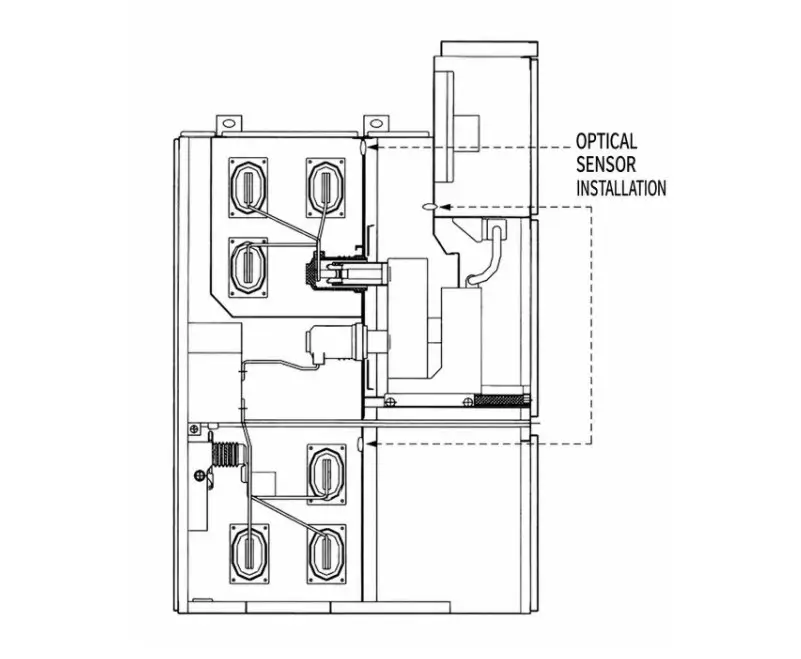
For enclosed busbar trunking, arc flash sensors should be installed at both ends of the trunking. To achieve comprehensive protection for the switchgear, sensors may also be installed in the circuit breaker compartment and the cable compartment.
Installation must be tailored to site-specific conditions. Point-type arc flash sensors are recommended for areas with distinct boundaries and clearly defined potential arcing zones—such as isolated busbar compartments, circuit breaker contact areas, or cable termination points.
Strip-type arc flash sensors are recommended for complex structures with confined spaces, significant obstructions, or ill-defined arcing zones—such as draw-out switchgear or rectifier cabinets; strip-type sensors are also recommended for open-type busbar compartments. The sensing elements and connecting components must not compromise the insulation integrity of the primary equipment; passive sensors are preferred to avoid introducing high-voltage circuits into the arc protection device’s power supply.
Conclusion
Selecting the appropriate arc flash sensor is crucial for effective arc flash protection. Selection should take into account the sensor type, detection range, switchgear structure, and potential arc fault locations. Passive fiber-optic sensors offer advantages such as electrical isolation and strong electromagnetic interference immunity, making them suitable for switchgear requiring high levels of safety and reliability. When paired with a high-speed arc protection relay, the system can rapidly detect arc faults and trigger circuit breaker tripping, thereby minimizing equipment damage and enhancing both electrical system operational safety and personnel protection.